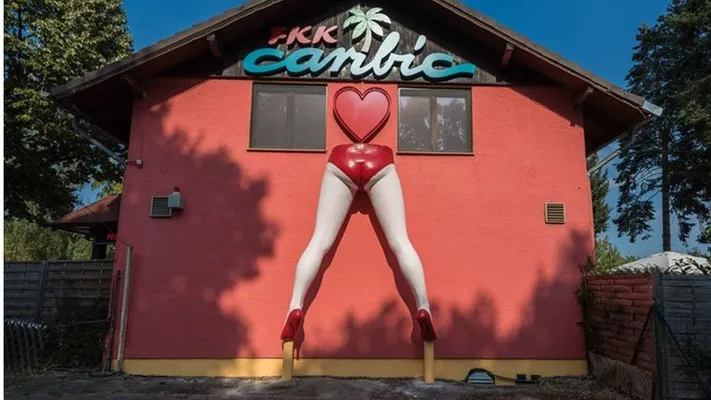
Caribic Mainz/Wiesbaden (D)
Wiesbadener Straße 144, 55252 Mainz-Kastel
Last updated on
Something wrong or missing?
Prices, opening times and all features · Caribic Mainz/Wiesbaden (D)
Features
Yes · 6
- Air conditioning
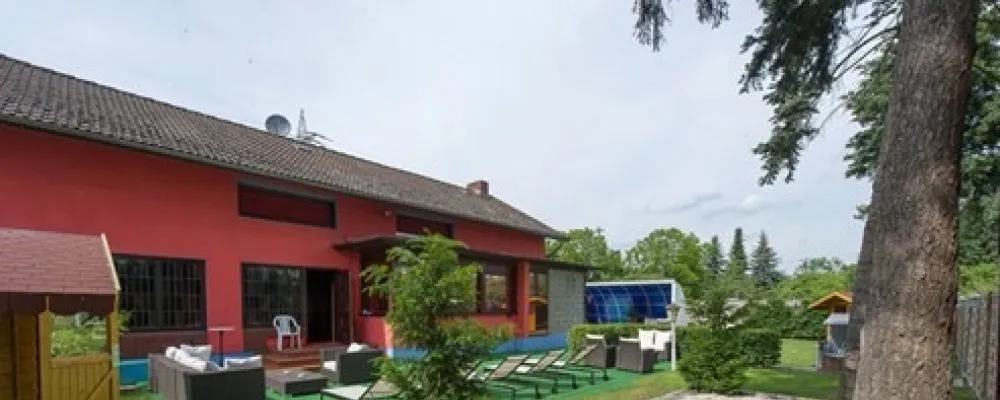
- Outdoor area (garden)
- Card payment / ATM
- Food included
- Finnish sauna
- Indoor whirlpool
No · 24
- Beer included
- Draught beer
- Cocktails
- Step-free access
- Free parking
- Free Wi-Fi
- Live DJ
- Live shows
- Professional massage
- Pick-up service
- Adult cinema
- Overnight stay possible
- Valuables lockers
- Screened parking
- Slot machines
- SM room
- Soft drinks included
- Live sport on TV
- Steam bath
- Indoor pool
- Outdoor pool
- Solarium
- Hot dinner
- Outdoor whirlpool
More features
Large bar and lounge area, air-conditioned rooms, new sauna, whirlpool, outdoor area. Cash machine in the club. At the town border with Wiesbaden-Amöneburg.
Size / area
Medium-sized club
- Indoor
- 600 m²
- Outdoor
- 500 m²
What to expect at Caribic Mainz/Wiesbaden (D)
Mainz-Kastel
- Name origin
- Castellum Mattiacorum (lat. = fort in the land of the Mattiaci)
- First documented mention
- 11 BC
- Population
- 14,000
- Area
- 9.51 km²
- Federal state
- Hessen
- Administrative region
- Wiesbaden
- District
- /
- Vehicle registration
- WI
- River
- Main-->Rhein
The Club Caribic is located on the right bank of the Rhine in Mainz-Kastel and is a district of the Hessian state capital Wiesbaden.
Mainz-Kastel lies about 1 km north of where the Main flows into the Rhine and already had significance as a bridgehead over the Rhine in Roman times. In the year 11 BC the "Castellum Mattiacorum" was fortified there. In 1806 a cession treaty concerning Kastel and Kostheim between the French Empire and the Principality of Nassau-Usingen regulated a cession to the city of Mainz. Mainz, on the other hand, became part of the Grand Duchy of Hesse (Rheinhessen) after the Congress of Vienna in 1815.
As a result of the peace treaty concluded on 3 September 1866 between Prussia and Hessen-Darmstadt - following the German War won by Prussia - all territories of Hessen-Darmstadt lying north of the Main, including Kastel and Kostheim, became part of the North German Confederation, unlike the Mainz district on the left bank of the Rhine; the Confederation was later absorbed into the German Empire in 1871. After 1866 Kastel was a garrison of the Royal Prussian Army, and the Mudra-Kaserne, which still exists today, dates from this period; in 1951 the Hessian riot police took over the buildings.
After the conclusion of an incorporation treaty, the then independent town of Kastel became a district of Mainz again on 1 April 1908; it was only in 1945, due to the drawing of the occupation zone borders (the area on the left bank of the Rhine, including Mainz, lay in the French occupation zone), that it was placed under the administration of the city of Wiesbaden by the American authorities. Kastel is one of the six districts of Mainz on the right bank of the Rhine that were separated from Mainz in this way.
Kastel was almost completely destroyed by British and American bomber attacks on 8 and 9 September 1944.
The actor Horst Janson comes from Mainz-Kastel.
Kastel is home to the northernmost Roman honorary arch found to date. It was probably erected in honour of the Roman general Nero Claudius Germanicus, the father of Caligula, following his death in 19 AD.
Mainz-Kastel is located about 2 km east of the centre of Mainz and about 10 km south of the centre of Wiesbaden.