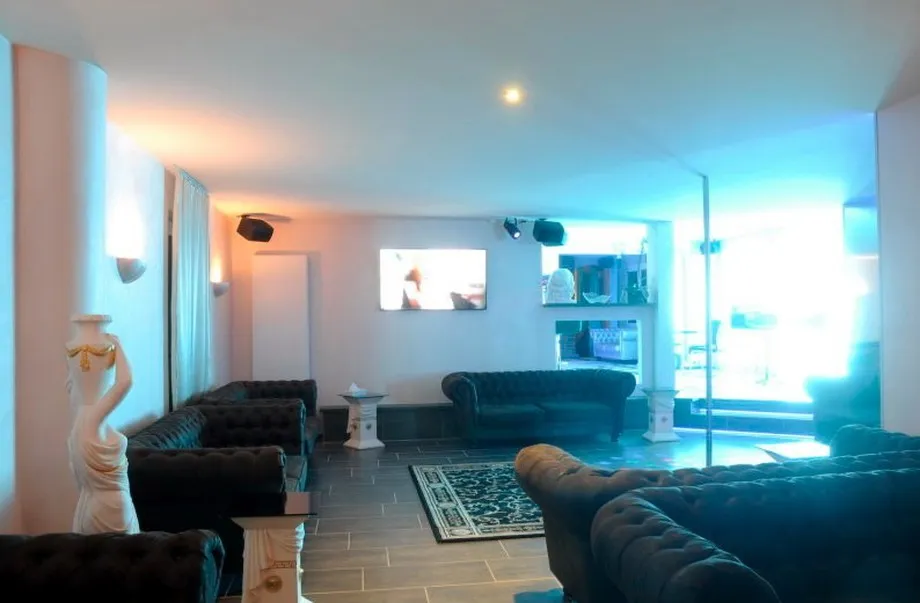
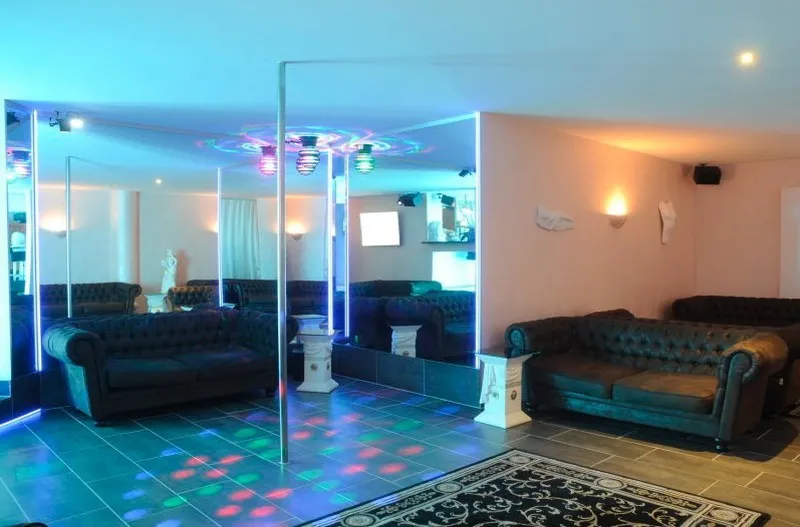
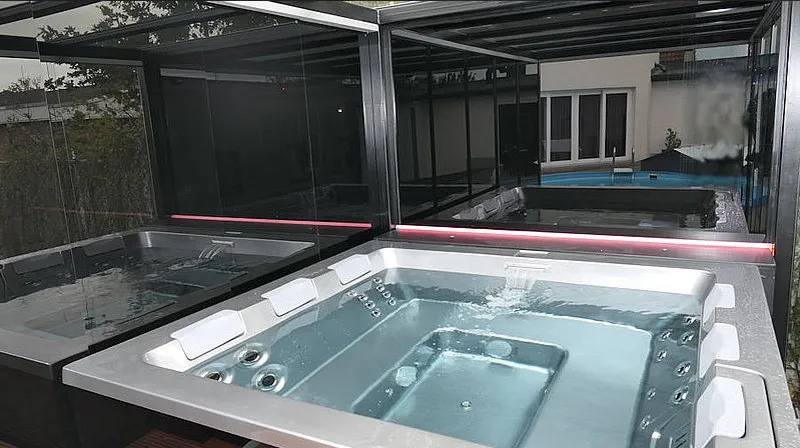
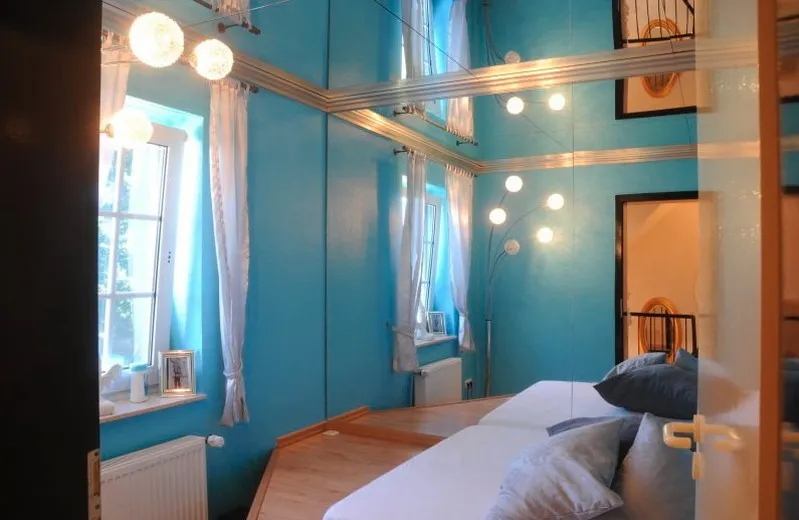
FKK Zeus Wallenhorst/Osnabrück (D)
Otto-Lilienthal-Straße 3, 49134 Wallenhorst
Last updated on
Something wrong or missing?
Prices, opening times and all features · FKK Zeus Wallenhorst/Osnabrück (D)
Features
Yes · 13
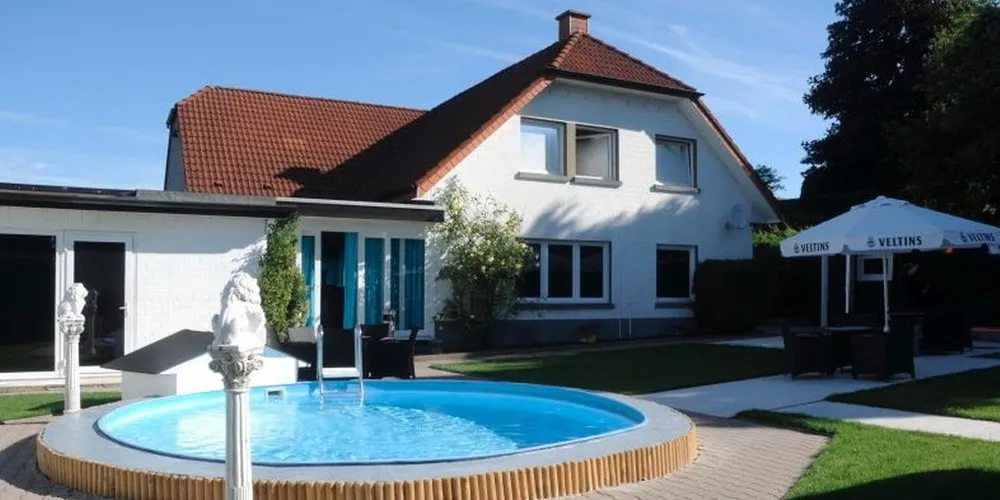
- Outdoor area (garden)
- Card payment / ATM
- Free parking
- Professional massage
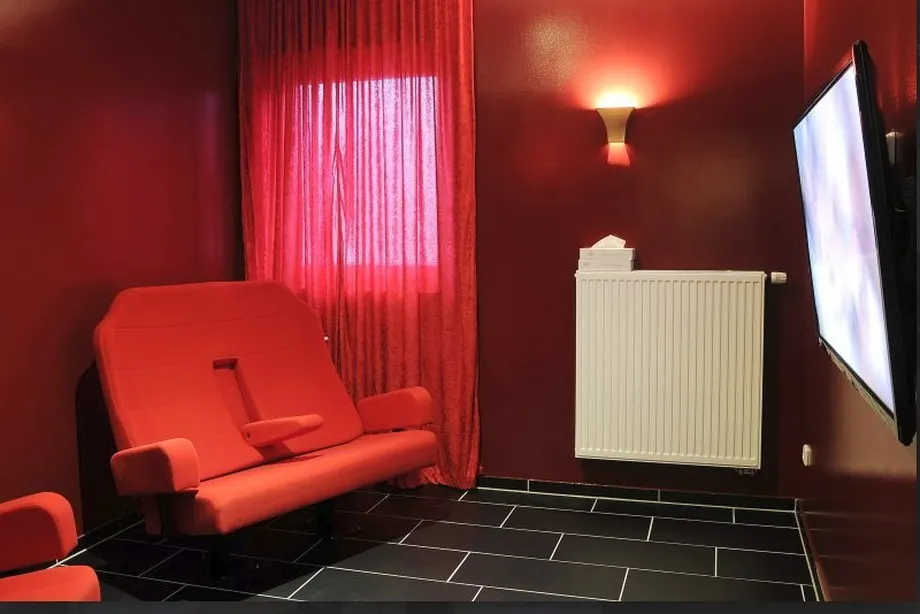
- Adult cinema
- Valuables lockers
- Finnish sauna
- Screened parking
- Live sport on TV
- Steam bath
- Outdoor pool
- Solarium
- Indoor whirlpool
No · 17
- Air conditioning
- Beer included
- Draught beer
- Cocktails
- Step-free access
- Food included
- Free Wi-Fi
- Live DJ
- Live shows
- Pick-up service
- Overnight stay possible
- Slot machines
- SM room
- Soft drinks included
- Indoor pool
- Hot dinner
- Outdoor whirlpool
More features
Size / area
Large club
- Indoor
- 1000 m²
- Outdoor
- 800 m²
What to expect at FKK Zeus Wallenhorst/Osnabrück (D)
Wallenhorst
- Name origin
- origin of the name disputed, possibly Osenbrugge (Nordic term for "bridge of the gods")
- First documented mention
- 780 AD
- Population
- 165,000
- Area
- 119.8 km²
- Federal state
- Niedersachsen
- Vehicle registration
- OS
- River
- Hase
The Saunaclub FKK Zeus is located in Wallenhorst near Osnabrück.
Osnabrück lies in Niedersachsen, right on the state border with Nordrhein-Westfalen, at the intersection of several motorways and railway lines, which makes the city an important transport hub.
Osnabrück shares a lot with the city of Münster, roughly 50 km further south, for example the railway connection of the Westfalenbahn under the zone tariff, which means that travellers with an NRW-Ticket bound for Osnabrück Hauptbahnhof – which, by the way, has the exotic form of a combined tower and marshalling station – don't need to buy an additional ticket. Just like Münster, Osnabrück is a bishop's seat and a university city; the city shares with Münster a Westphalian past, from which Osnabrück, unlike Münster, has however distanced itself, as well as the Flughafen Münster/Osnabrück (FMO).
But above all, Osnabrück and Münster are linked by the historically significant date of 1648, when, between 15 May and 24 October 1648, the Westphalian Peace was concluded in Münster and Osnabrück, ending the Thirty Years' War in Germany and, at the same time, the Eighty Years' War of Dutch independence. In the Peace Hall of Osnabrück's town hall, completed in 1512 in the late Gothic style and the city's landmark, 42 portrait paintings of the rulers and European envoys of that era still hang today.
Put simply, Münster lies in the Münsterland and Osnabrück in the Osnabrücker Land, but the city deserves a more precise geographical description, as it is enclosed by the TERRA.vita nature and geo-park, making it the only major German city that lies within a nature park. Osnabrück is situated in the Osnabrücker Hügelland, bordered to the north by the Wiehengebirge and to the south by the Teutoburg Forest, which is noticeable in the cityscape through its many hills. North of the Wiehengebirge, however, the North German Plain begins; the Osnabrücker Nordland there is characterised by terminal moraines, extensive moorlands and geest.
Osnabrück developed as a market around the bishop's seat founded in 780 by Charlemagne. Within the Holy Roman Empire, Osnabrück belonged until 1803 to the eponymous Hochstift. The oldest town constitution, the Sate, dates from 1348. The city joined the Hanseatic League in 1412; as a leading town (Prinzipalstadt), Osnabrück belonged to the Westphalian quarter of the Hanse and developed into a prospering trading city.
In 1803 the city passed to the Electorate of Hannover, but shortly afterwards it was occupied by French troops. In 1806 Osnabrück briefly belonged to Prussia, in 1807 Napoleon incorporated it into the Kingdom of Westphalia, and in 1810 into the French Empire. After Napoleon Bonaparte's abdication, the city passed to the Kingdom of Hannover, created in October 1814 in the course of the Congress of Vienna, from which, after the German War of 1866, the Prussian Province of Hannover emerged.
In the age of industrialisation, the Georgs-Marien-Bergwerks- und Hüttenverein (Georgsmarienhütte) settled near Osnabrück in 1856, and the Eisen- und Stahlwerk zu Osnabrück (later Klöckner-Stahlwerk) in 1868, establishing the city's tradition as a steel location. Today the city is in particular one of the German centres of paper production; the paper manufacturers and processors Felix Schoeller Gruppe, Kämmerer, Rasch Tapeten, Duni and Fislage are based here and in the surrounding area.
There is much to see in Osnabrück's tranquil city centre; besides the town hall, worth mentioning are the baroque Schloss Osnabrück, which today houses the university, the Dom St. Peter founded in 785, the Marienkirche, parts of the medieval town fortifications such as the Bucksturm, the Waterloo-Tor built in 1817 at the former Heger Tor, the Ledenhof, the Haus Tenge, the Theater am Domhof or the Akzisehaus, as well as the Felix-Nussbaum-Haus within the city of Osnabrück's museum complex.
Thanks to its exposed location within the nature park, Osnabrück is, among other things, an excellent starting or finishing point for several long-distance hiking trails maintained by the Wiehengebirgsverband Weser-Ems, including the Handelsweg, the Hünenweg, the Pickerweg and the Wittekindsweg. The natural oases Rubbenbruchsee and Attersee serve as natural bathing waters.
Born in Osnabrück were Carl Krone, Erich Maria Remarque, Felix Nussbaum, Hartwig Piepenbrock, Olaf Scholz, Christian Wulff and Robin Schulz.
Wallenhorst:
Wallenhorst is an independent municipality in the Landkreis Osnabrück. It is located about 8 km north of Osnabrück's city centre and was first documented around 863 AD in the Latin legend De miraculis sancti Alexandri as Walonhurst. In the course of the final territorial reform of 1972, Wallenhorst was not incorporated into Osnabrück, but historically, culturally and economically it belongs to the Osnabrück area.