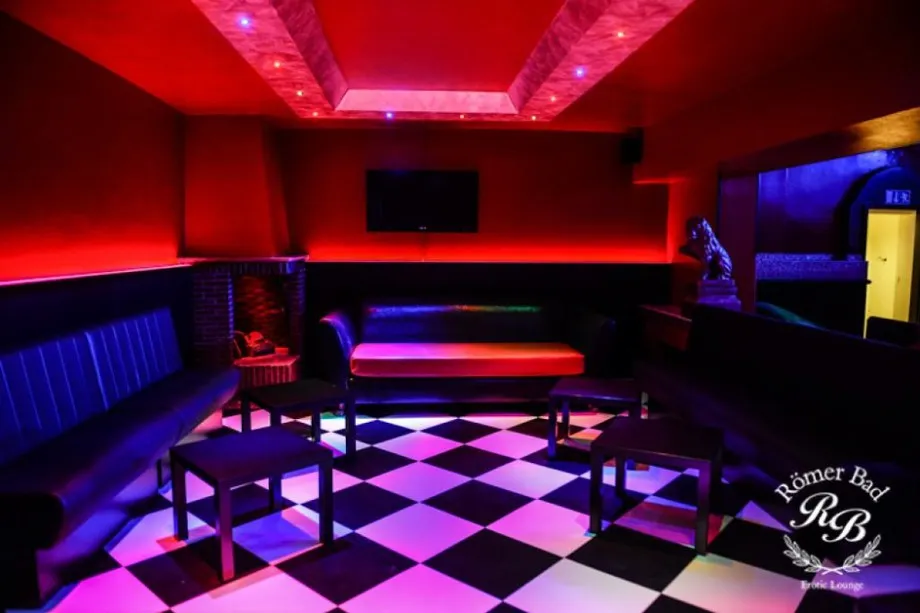
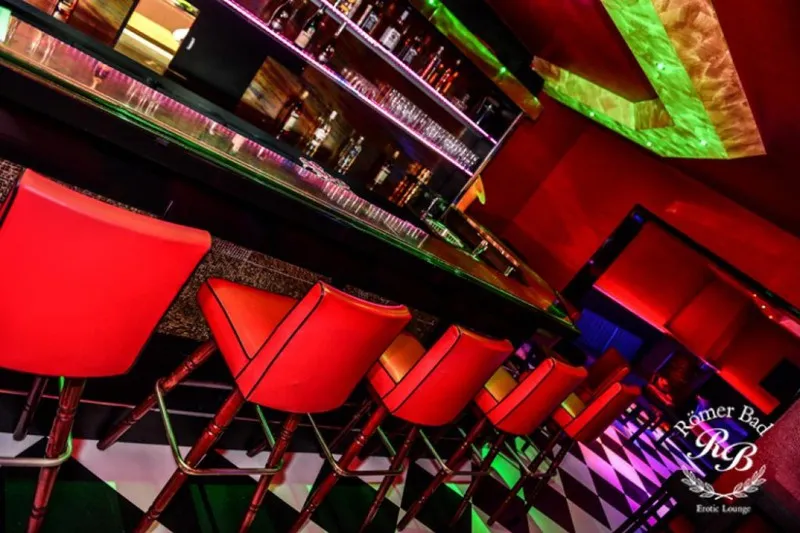
Römerbad Köln (D)
Mathias-Brüggen-Straße 10-14, 50827 Köln
Last updated on
Something wrong or missing?
This club carries on under a new name.
Carries on as: FKK Amari Köln (D)
Clubs nearby · Römerbad Köln (D)
Prices, opening times and all features · Römerbad Köln (D)
Features
Yes · 5
- Draught beer
- Card payment / ATM
- Cocktails
- Free parking
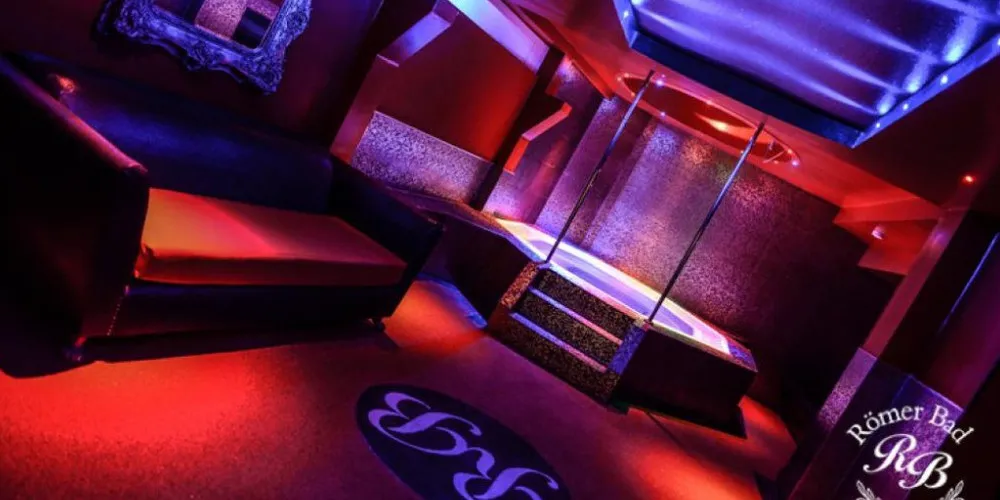
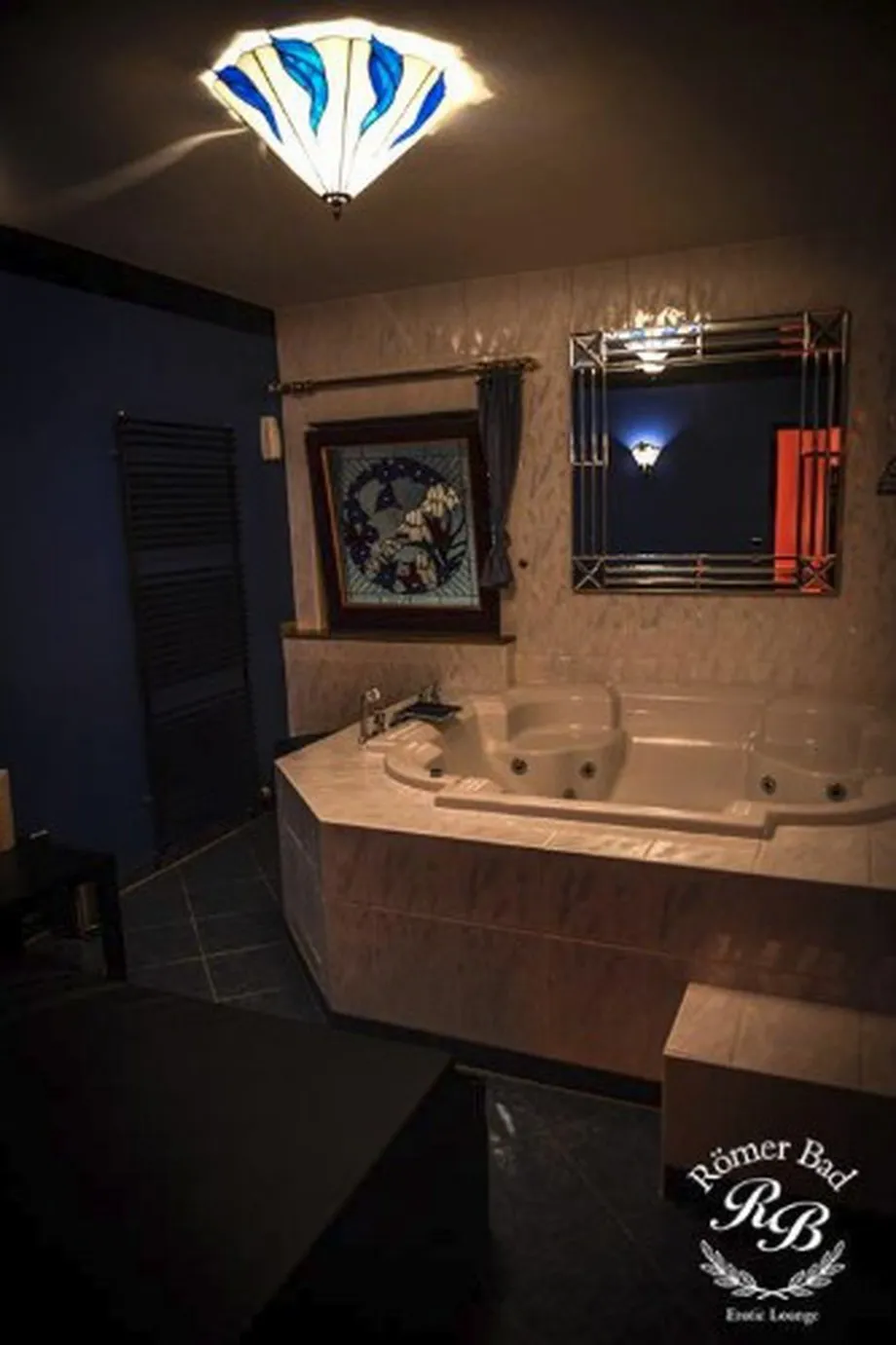
- Indoor whirlpool
No · 25
- Air conditioning
- Outdoor area (garden)
- Beer included
- Step-free access
- Food included
- Free Wi-Fi
- Live DJ
- Live shows
- Professional massage
- Pick-up service
- Adult cinema
- Overnight stay possible
- Valuables lockers
- Finnish sauna
- Screened parking
- Slot machines
- SM room
- Soft drinks included
- Live sport on TV
- Steam bath
- Indoor pool
- Outdoor pool
- Solarium
- Hot dinner
- Outdoor whirlpool
Size / area
Small club
- Indoor
- 800 m²
What to expect at Römerbad Köln (D)
Köln
- Name origin
- Colonia Claudia Ara Agrippinensium (Latin = Claudian Colony and Altar of the Agrippinenses)
- First documented mention
- 50 AD
- Population
- 1,084,000
- Area
- 405.01 km²
- Federal state
- North Rhine-Westphalia
- Administrative region
- Cologne
- District
- /
- Vehicle registration
- K
- River
- Rhine
The Club Römerbad is located in Köln-Bickendorf.
The history of Cologne, the largest metropolis in NRW, can be traced back to Roman times, from which various buildings such as the Römerturm, part of the city wall, still survive. The cathedral city can be reached via various motorways such as the A1, A3, A4 and A57. Travellers arriving by train usually come into Cologne at the main station.
For long-distance train travellers it's worth noting that not all ICE trains stop at Cologne's main station – to save time, some only stop at the station on the right bank of the Rhine, Köln-Messe/Deutz. For local transport, Cologne has a dense network of light rail and buses, complemented by the S-Bahn. The light rail, operated with modern trams, connects the famous cathedral city in NRW with, among other places, Bonn.
The number of hotels and holiday apartments in Cologne is overwhelming. There are definitely affordable places to stay too – besides hostels near the city centre, they can mainly be found in guesthouses and hotels in Cologne's outer districts.
The central sight is the cathedral, located right by the main station and the Rhine, which is the city's ultimate landmark and one of the most important Gothic buildings in the world. Cologne also has numerous other churches and historical buildings, some of which even surpass the cathedral in cultural-historical significance. Furthermore, Cologne is home to numerous art museums and the Roman-Germanic Museum. An insider tip is the Chocolate Museum, located right on the Rhine.
With Kölsch, Cologne has its own top-fermented beer, the enjoyment of which rounds off any visit to the city. Along the Rhine promenade, directly opposite the old town, you'll find wonderful pubs and restaurants with views of the Rhine, where you can enjoy the Cologne way of life late into the night. At the annual summer music and fireworks event "Kölner Lichter" on the Rhine, around a million spectators gather on both banks of the river.
Well-known sons and daughters of Cologne include Jacques Offenbach, Ferdinand Franz Wallraf, Eduard Salomon von Oppenheim, Carl Bosch, August Bebel, Konrad Adenauer, Freya von Moltke, Wolfgang Graf Berghe von Trips, Mildred Scheel, Josef Neven DuMont, Willi Ostermann, Willy Birgel, Jupp Schmitz, Trude Herr, Willy Millowitsch, Peter & Mariele Millowitsch, Hans Süper, Otto Wolff von Amerongen, Nico, Heinrich Böll, Marie-Louise Steinbauer, Jürgen Becker, Rolf Kühn, Wolfgang Petry, Jürgen Zeltinger, Purple Schulz, Wolfgang Niedecken, Jean Pütz, Jack White, Dirk Bach, Heiner Lauterbach, Britta Heidemann, Anne Will, Marietta Slomka, Florian Henckel von Donnersmarck, Tina Ruland, Katharina Schüttler, Guido Cantz, Stefan Raab and Sarah Kern.
Facts about the super-metropolis Cologne on the Rhine:
- Cologne looks back on around 2,000 years of history, making it one of the oldest cities in Germany
- alongside Prague and Nuremberg, Cologne was one of the most important cities of the Holy Roman Empire (962–1803)
- Cologne Cathedral (Hohe Domkirche Sankt Petrus) is one of the most significant sacred buildings in the world, home to the largest church bell of all, and houses the relics of the Three Wise Men
- the Archdiocese of Cologne is the third-richest diocese in Germany, behind Munich and Paderborn
- Cologne Carnival is the biggest carnival festival in the northern hemisphere, generating around 400 million euros in revenue for the city during the "fifth season"
- the WDR, based in Cologne, is the largest broadcaster in Europe after the BBC
- RTL, based in Cologne since 1988, is the largest private broadcaster in Europe
- with around 50,000 students, Cologne is home to Germany's third-largest university, behind Munich and the Fernuniversität Hagen
- the Schildergasse/Hohe Straße in Cologne's city centre is one of Germany's busiest shopping streets
- the Kölner Pascha on Hornstraße is the largest high-rise brothel in the world
- Kölsch is, on the one hand, a pale, top-fermented full beer that, according to the Kölsch Convention, may only be brewed in and around Cologne ...
- ... and on the other hand, an urban dialect belonging to the Ripuarian dialect group, which hardly anyone outside the Cologne metropolitan area understands
- Kölscher Klüngel is a one-of-a-kind system worldwide, based on mutual assistance and favours between officials in administration and business, for the benefit of the population
- the Kölsche Grundgesetz is the informal constitution of the city of Cologne and contains 11 articles:
Article 1: It is what it is.
Article 2: It comes as it comes.
Article 3: It's always turned out fine so far.
Article 4: What's gone is gone.
Article 5: Nothing stays as it was.
Article 6: Don't know it, don't need it, get rid of it.
Article 7: What are you gonna do about it?
Article 8: Do it well, but not too often.
Article 9: What's all this nonsense about?
Article 10: Will you have a drink with me?
Article 11: You'll laugh yourself to pieces.
Important additional articles:
Every fool is different.
If you don't come today, you'll come tomorrow.
It could have turned out worse.
You have to be able to indulge others too.
You have to be able to indulge yourself too.
Stay as you are.
The good Lord isn't like that.
We've always done it that way.
Not everything with a hole in it is broken.
Doesn't matter.
One man's owl is another man's nightingale.
We're not superstitious.
Whoever can party can also work hard.
You never know, you can't see inside it.
So let one fool leave another fool be.
Even the craziest ass has his own face.
To each creature its own little pleasure.
That only, only, only happens in Cologne.
Did I really say that?
You are Cologne.
You never know.
What we don't have, we can't do.
Live and let live.