Freudenhaus Münster (Westfalen) (D)
Höltenweg 75, 48155 Münster
Ultimo aggiornamento il
Qualcosa non va o manca?
Caratteristiche
Sì · 13
- Air conditioning
- Outdoor area (garden)
- Card payment / ATM
- Food included
- Free parking
- Adult cinema
- Finnish sauna
- Screened parking
- Slot machines
- Soft drinks included
- Live sport on TV
- Hot dinner
- Outdoor whirlpool
No · 17
- Beer included
- Draught beer
- Cocktails
- Step-free access
- Free Wi-Fi
- Live DJ
- Live shows
- Professional massage
- Pick-up service
- Overnight stay possible
- Valuables lockers
- SM room
- Steam bath
- Indoor pool
- Outdoor pool
- Solarium
- Indoor whirlpool
Altre caratteristiche
Dimensioni / superficie
Club piccolo
- Interno
- 500 m²
- Esterno
- 300 m²
Cosa ti aspetta da Freudenhaus Münster (Westfalen) (D)
Münster
- Name origin
- original settlement Mimigernaford; later founding of a "monasterium" (Latin, = monastery)
- First documented mention
- 793 AD
- Population
- 316,000
- Area
- 303.28 km²
- Federal state
- Nordrhein-Westfalen
- Administrative region
- Münster
- District
- /
- Vehicle registration
- MS
- River
- Münstersche Aa
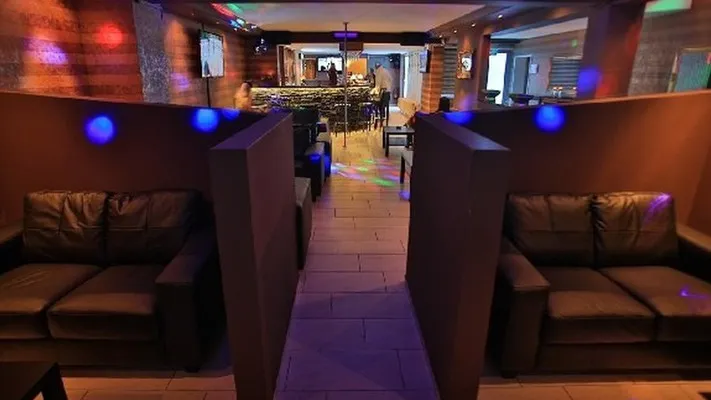
The Club Freudenhaus is located on the western edge of Münster-Gremmendorf.
When you stroll through the tranquil lanes between Prinzipalmarkt, the Historisches Rathaus and St-Paulus-Dom of Münster's old town, beautifully restored after the war, and the adjoining Schlosspark, you can hardly believe that this city has more than 300,000 inhabitants. At the time of the Vienna Congress in 1815, Münster became the capital of Westphalia and was thereby assigned important responsibilities. Today, Münster is the seat of the Constitutional Court and the Higher Administrative Court for the state of Nordrhein-Westfalen, a bishop's see and an important university town, which gives the cityscape a fresh, young flair shaped by students.
The latter, together with the proximity to the Dutch border, where traditionally many "Fietser" are out and about, is not least the reason why Münster is the quintessential cyclists' city in Germany - in Münster's city centre, cyclists dominate the traffic scene.
In 1648, the Peace of Westphalia at Münster and Osnabrück ended both the Thirty Years' War and the Eighty Years' War, thereby not only putting an end to decades of unspeakable suffering and destruction in Central Europe, but also realigning the political balance in Europe and, incidentally, ushering in the birth of the modern Netherlands. From both a German and a Dutch perspective, Münster is a place of great historical significance.
The surrounding Münsterland, too, a mostly idyllic landscape of gently rolling meadows and woods, is home to numerous places of great tourist appeal. Hardly any other region in Germany is so richly dotted with romantic moated castles and fortresses, gardens and parks, which are especially well explored on horseback and by bike. Wellness hotels, events, a rich museum landscape and many leisure options make Münster a destination par excellence.
Among the well-known sons and daughters of Münster are Annette von Droste-Hülshoff, Heinrich Brüning, Rainer Klimke, Friedhelm Busch, Günter Jauch, Götz Alsmann, Ute Lemper, Guido Maria Kretschmer, WestBam, Kuddel and Franka Potente.