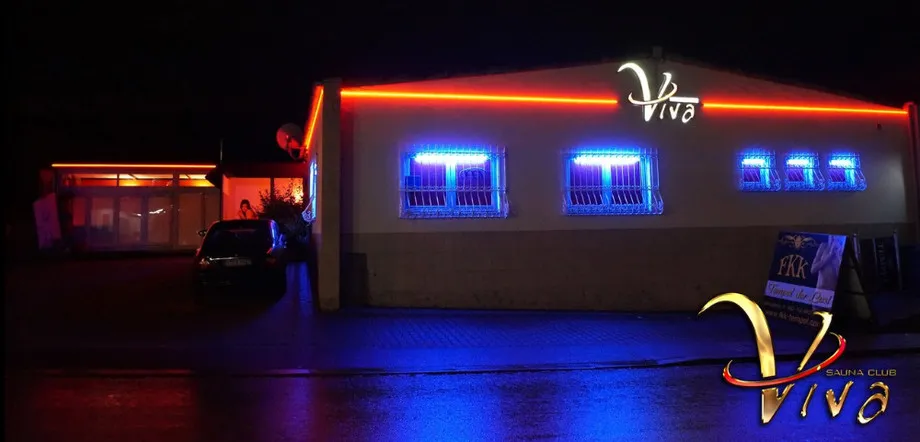
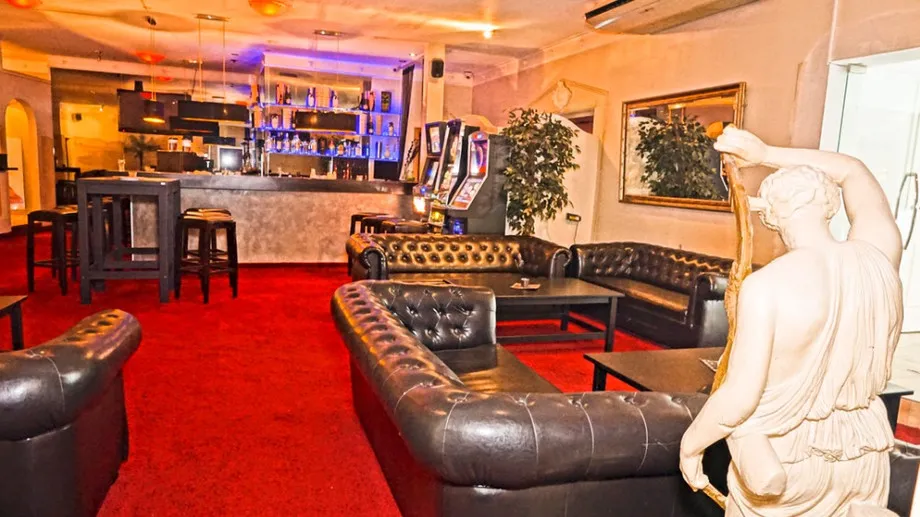
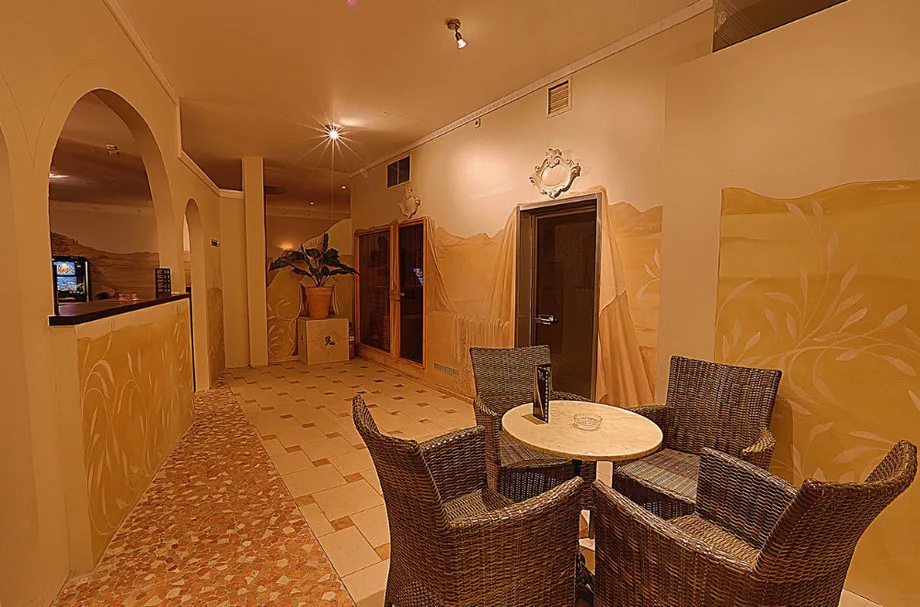
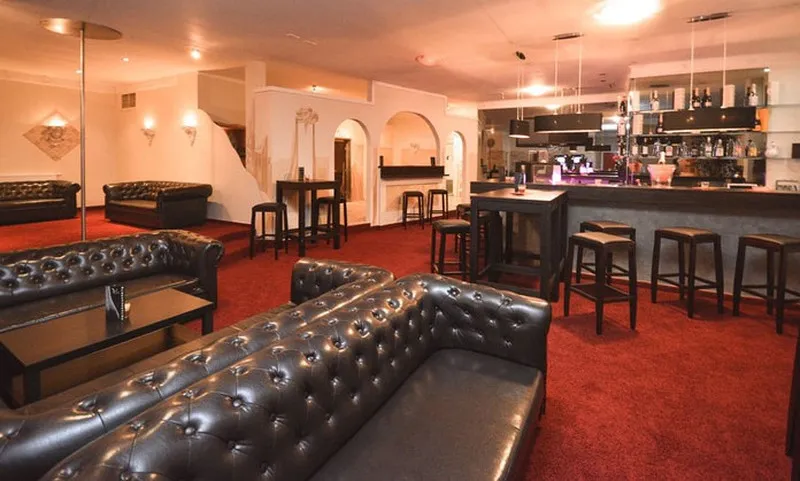
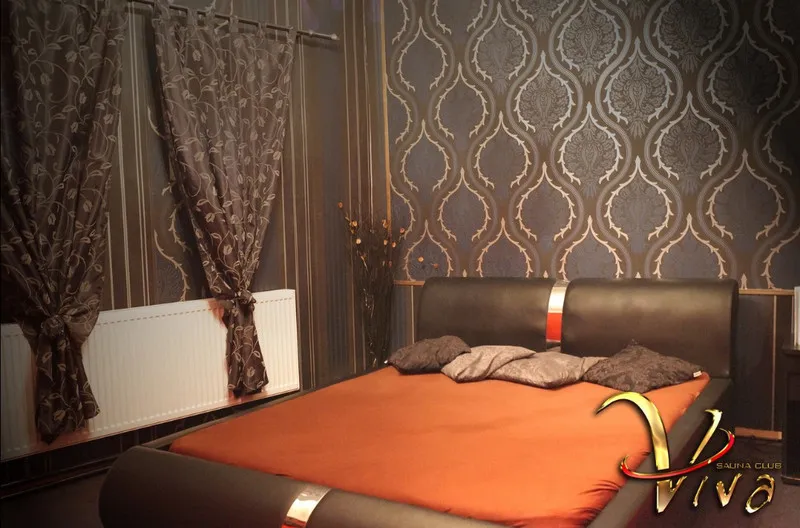
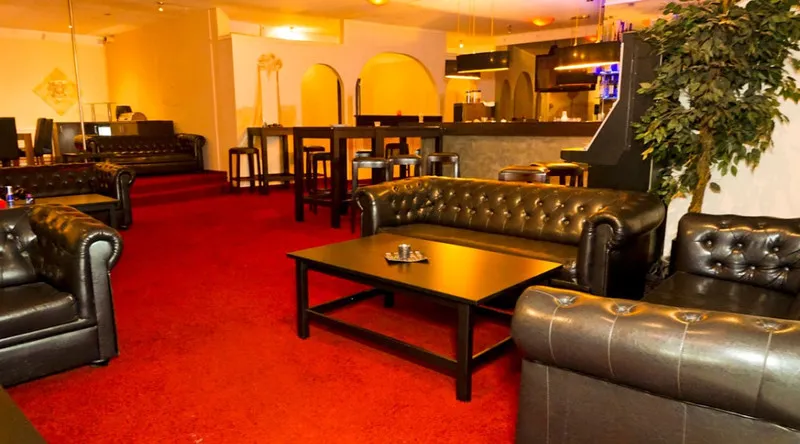
FKK Havana (ex Viva) Würzburg (D)
Gattinger Straße 2, 97076 Würzburg
Last updated on
Something wrong or missing?
This club has closed for good.
Clubs nearby · FKK Havana (ex Viva) Würzburg (D)
Prices, opening times and all features · FKK Havana (ex Viva) Würzburg (D)
Features
Yes · 8
- Outdoor area (garden)
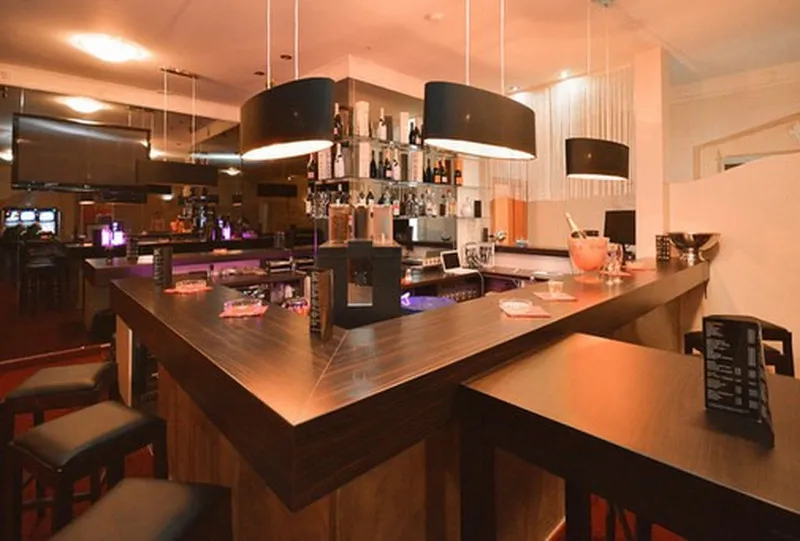
- Draught beer
- Free parking
- Valuables lockers
- Finnish sauna
- Slot machines
- Soft drinks included
- Steam bath
No · 22
- Air conditioning
- Beer included
- Card payment / ATM
- Cocktails
- Step-free access
- Food included
- Free Wi-Fi
- Live DJ
- Live shows
- Professional massage
- Pick-up service
- Adult cinema
- Overnight stay possible
- Screened parking
- SM room
- Live sport on TV
- Indoor pool
- Outdoor pool
- Solarium
- Hot dinner
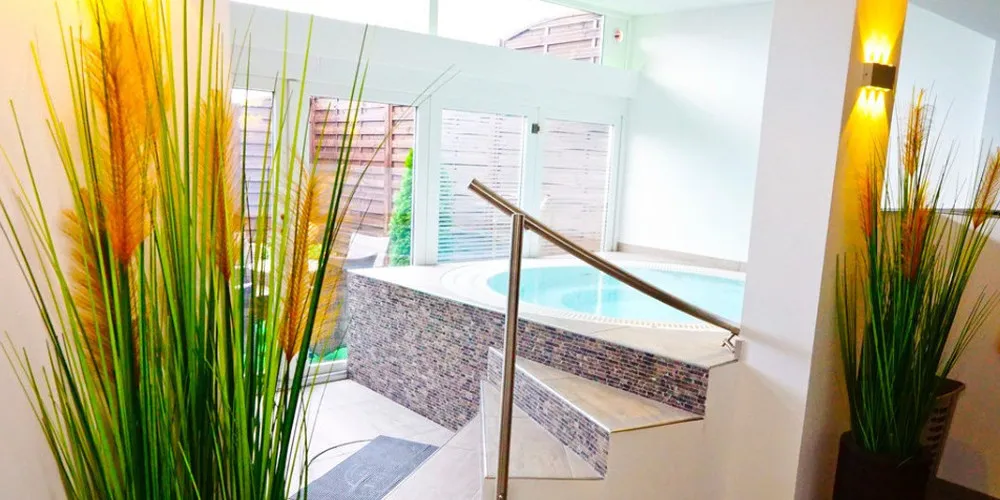
- Indoor whirlpool
- Outdoor whirlpool
Size / area
Small club
- Indoor
- 450 m²
- Outdoor
- 50 m²
What to expect at FKK Havana (ex Viva) Würzburg (D)
Würzburg
- Name origin
- Virteburch (Old High German; the meaning of the word Virc/Würz is disputed; possible meanings include wurz=herb, werz=maiden, urzi=mountain or virtus=virtue. The second part of the word, Burch, stands for castle/fortress) --> Wirzaburg, Wirciburc, Vvirziburg
- First documented mention
- 704 AD
- Population
- 128,000
- Area
- 87.63 km²
- Federal state
- Bavaria
- Administrative region
- Unterfranken
- District
- /
- Vehicle registration
- WÜ
- River
- Pleichach --> Main
The club FKK Havana is located in Würzburg-Lengfeld.
"Am I already in Bavaria?", the unsuspecting stranger asks himself as he heads south on the A3 from Hanau, when at Heidingsfeld the Festung Marienberg, the landmark of the first big city on his route, already looms towards him from afar. "But of course!", every Würzburger will indignantly retort, shaking his head in disbelief at such an ill-informed question. And indeed, the old pilgrim city on the Main, which itself already takes a distinct bend southward near Hanau, lies far south of the Mainline and thus also well below the generally recognised Weißwurst equator, which places Würzburg firmly within the traditional Bavarian sphere. Only die-hard Altbaiern will hold a differing opinion on this.
The fact is that the settlement, Celtic in the mists of time, can look back on a proud Franconian history and was already a Franconian ducal seat in the year 604. At the Reichstag zu Würzburg in 1168, the city became the residence of the prince-bishops. The result of this history: the Würzburger Residenz, completed in 1781, in UNESCO's opinion the most extraordinary of all Baroque palaces belonging to one of Europe's most brilliant princely courts, showing in its mighty staircase the largest continuous ceiling fresco in the world, and with its Spiegelsaal in the Kaiserquartier, the most perfect Rococo work of spatial art. Balthasar Neumann, whose portrait once adorned the 50-DM notes of the last series, played a decisive role in this magnificent building as well as in other Würzburg structures.
Not that the city lacks further proud buildings: besides the Festung Marienberg, worth mentioning are the Neubaukirche of the Alte Universität, the Marienkirche, the Alte Kranen, the Rathaus with the Grafeneckart, the Käppele, the Huttenschlösschen, the Hof Marmelstein, the Frauenzuchthaus, the Alte Mainbrücke and the Neue Universität.
Würzburg is one of Germany's most significant and tradition-rich university towns; Wilhelm Conrad Röntgen discovered the X-ray radiation named after him here in 1895. The original founding of today's Julius-Maximilians-Universität dates back to 1402, making it the oldest university in Bavaria and the fourth-oldest in Germany.
The former Franconian duchy has only belonged to Bavaria since 1802, however. Under the Wittelsbachs, the city grew into a community of 100,000 inhabitants by the beginning of the 20th century. Today it is the seat of the government of Unterfranken. Würzburg is a major transport hub for road and rail traffic and lies on one of the routes of the Jakobsweg network to Santiago de Compostela. For several decades now, the city has also liked to call itself a Europastadt, referring to the work of Hannsheinz Bauer.
Due to its special location, Würzburg is a centre of Frankenwein and at the same time a brewing town rich in tradition. Würzburg is a city full of prospects and vitality, poised between tradition and modernity, where in the Lusamgärtchen one can quietly remember Walther von der Vogelweide, who presumably died here in 1230, and whose large student population at the same time gives the city a pulsating life.
Famous sons and daughters of Würzburg include, among others, Konrad von Würzburg, Johann Philipp Franz von Schönborn, Luitpold von Bayern, Hildegard Luise von Bayern, Heinrich Kiliani, Paul Panzer, Alfred Jodl, Matthias Grünewald, Carl Diem, Werner Heisenberg, Josef Neckermann, Otmar Issing, Leo Kirch, Jutta Ditfurth, Thomas Bach and Dirk Nowitzki.