FKK Luder-Lounge Dortmund (D)
Unterste-Wilms-Straße 9, 44143 Dortmund
Last updated on
Something wrong or missing?
Prices, opening times and all features · FKK Luder-Lounge Dortmund (D)
Features
Yes · 3
- Outdoor area (garden)
- Free parking
- Finnish sauna
No · 27
- Air conditioning
- Beer included
- Draught beer
- Card payment / ATM
- Cocktails
- Step-free access
- Food included
- Free Wi-Fi
- Live DJ
- Live shows
- Professional massage
- Pick-up service
- Adult cinema
- Overnight stay possible
- Valuables lockers
- Screened parking
- Slot machines
- SM room
- Soft drinks included
- Live sport on TV
- Steam bath
- Indoor pool
- Outdoor pool
- Solarium
- Hot dinner
- Indoor whirlpool
- Outdoor whirlpool
More features
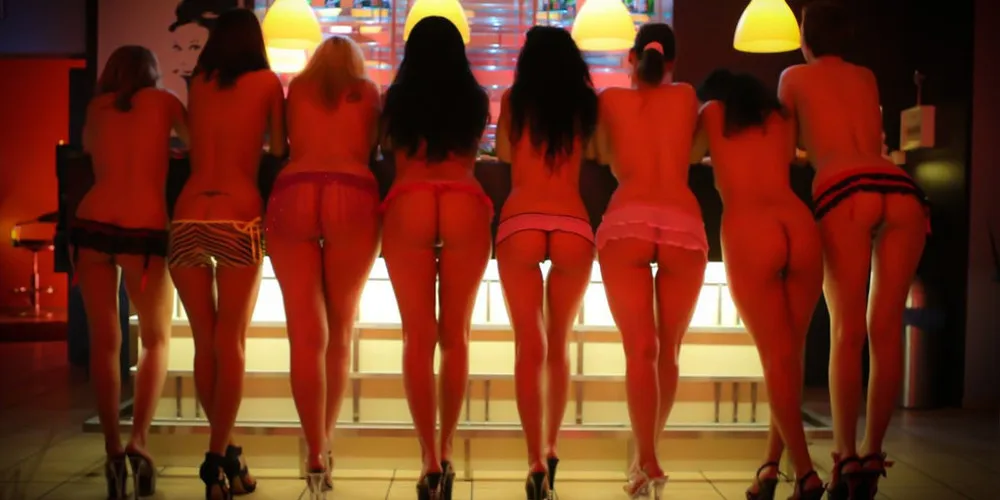
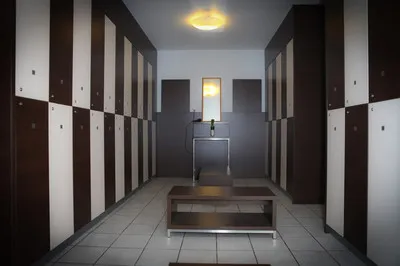
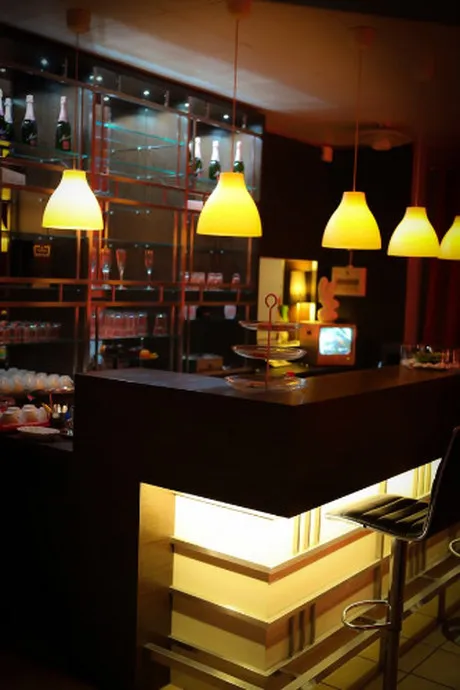
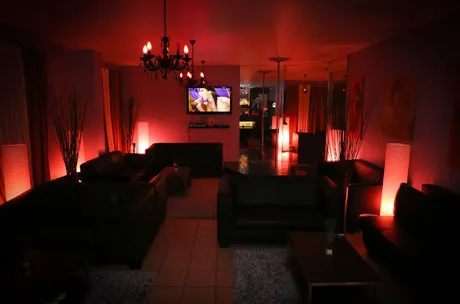
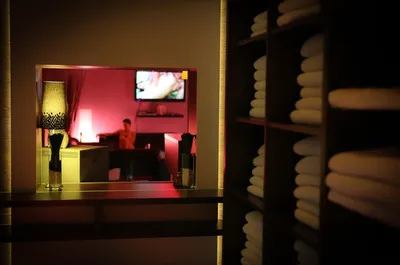
Day club from 10 am in the middle of Dortmund. Lounge, sauna, showers, outdoor area, rooms, parking at the entrance.
Size / area
Small club
- Indoor
- 500 m²
- Outdoor
- 100 m²
What to expect at FKK Luder-Lounge Dortmund (D)
Dortmund
- Name origin
- meaning disputed, possibly "Throtmanni" (Old Saxon, ="Trutzmänner") --> Dortmund
- First documented mention
- 882 AD
- Population
- 588,000
- Area
- 280.71 km²
- Federal state
- Nordrhein-Westfalen
administrative district (Regierungsbezirk): Arnsberg
district (Kreis): /
Vehicle registration: DO
River: Ruhr, Emscher
The club FKK Luder-Lounge is located in Dortmund-Wambel.
"So where's the old town here then?" the unsuspecting visitor will wonder as he strolls along and around the Westenhellweg in the heart of the city centre - alongside the Kaufingerstraße in München, the Zeil in Frankfurt am Main and the Schildergasse in Köln one of the most frequented shopping streets in Germany - as he walks through Dortmund's city centre within the clearly recognisable line of the Wallring. It simply no longer exists. The most traditionally rich of the three great economic and trading centres of the Ruhrgebiet (Dortmund - Essen - Duisburg), once an important imperial and Hanseatic city along the Hellweg, had to endure a total obliteration of its city centre more than most other cities. On 12 March 1945 the heaviest conventional air offensive of the entire Second World War was flown against a city in Europe; Dortmund's city centre was smashed so massively that after the war there was debate as to whether it wouldn't be better to rebuild the city somewhere else entirely. The four historic city churches in the old town, however - among them the Reinoldikirche, named after Saint Reinoldus, the city's patron saint, who according to legend was said to have been a nephew of Charlemagne - survived by some miracle.
Seen in this light, the once bombed-out Ruhrgebiet metropolis has developed magnificently. It is the largest city in Westfalen, a territory originally ruled by Saxon tribes which, after their Christianisation in Carolingian times, gave rise around 1180 to the Duchy of Westfalen and Engern and was incorporated into the Prussian state in 1815 as the Province of Westfalen with its capital Münster. It is now also the largest city in the Ruhrgebiet both in terms of area and population, and ranks far ahead of the other cities of this region in the Zukunftsatlas Deutschland ranking. Its best-known calling card is the top-flight football club Borussia Dortmund, which for years has been, alongside FC Bayern München, the most successful German football club, but the city has far more to offer than that. Known above all for steel (Hoesch), coal (Phoenix) and beer (DAB) - Dortmund has a brewing tradition established since the Middle Ages - Dortmund today, after many years of structural change, is a centre of the insurance industry and of retail. More than 50,000 students are enrolled at Dortmund's six institutions of higher education, among them the Technische Universität Dortmund, and 19 further research institutions, helping the city establish a profile as an important centre for science and high technology. The city's landmark is the Dortmunder U-Turm, a high-rise building erected in 1926/1927 as the "fermentation and storage cellar" of the Dortmunder Union Brauerei on the western edge of Dortmund's city centre, which today houses, among other things, the Museum Ostwall and the Hartware Medienkunstverein.
Dortmund's beginnings lie in the 10th century, when the settlement developed into an imperial palatinate (Kaiserpfalz). The first mention of Dortmund's market rights dates from the year 990. In the 11th century, according to legend, Reinoldus became the city's patron saint. A city wall existed by 1150, and in the middle of the 12th century Konrad III granted Dortmund its town charter, which was confirmed in 1236 by Emperor Friedrich II for the Imperial City [burgus] Tremonia - a name that is still occasionally used for the city of Dortmund in Romance-speaking countries today. In 1293 the city was granted brewing rights, and an unparalleled development of the beer industry within the city began.
During the Great Dortmund Feud, the Imperial City of Dortmund found itself, in the years 1388 to 1389, subjected to attacks and a siege by troops of the Archbishop of Köln, the Counts of the Mark and 20 other cities. The costs of the feud and the peace settlement, around 60,000 guilders, were so high that it is widely assumed this event triggered Dortmund's temporary decline in the following centuries. At the latest after the Thirty Years' War, in which the city suffered severe damage and was completely in debt, Dortmund sank into insignificance.
With industrialisation in the 19th century, a new, gigantic boom began in the Prussian era. The city became an important transport hub with the opening of the Cöln-Mindener railway in 1847, a role it has retained to this day, and developed into a centre of coal mining and steel processing. A further significant contribution to economic development was made in 1899 by the opening of the Dortmund-Ems-Kanal and, with it, the harbour.
Today Dortmund is a city that has undergone a highly praised structural transformation. Between 1960 and 1994, the number of people employed in industry fell from 127,000 to 37,000. New jobs were created mainly in information processing as well as at banks and insurance companies. In 1984, close to the university, the Technologiezentrum was opened as one of the first of its kind in Germany. With initiatives such as the Stadtkrone-Ost project or the dortmund-project, new leading industries were developed for the city; Dortmund is now among the leading logistics locations in Germany and is a major retail centre as well as remaining one of the largest locations in Germany for plant and machinery engineering.
Dortmund's architecture is strongly shaped by the style of the post-war era and postmodernism. From medieval times, practically only the Adlerturm and its outlying watchtower, the Steinerne Turm, survive as a remaining section of the historic city wall, which is over 800 years old. Defining buildings in Dortmund today include, alongside a cluster of mid-rise buildings such as the Dortmunder U, RWE Tower, IWO-Hochhaus, Sparkassen-Hochhaus, Telekom-Hochhaus, Harenberg City-Center, Ellipson and Westfalentower, the Konzerthaus Dortmund, the Thier-Einkaufsgalerie and, of course, the Westfalenhalle, built in the 1920s, which was for a time the largest hall building in Europe. Important city squares include the Alte Markt, the Friedensplatz, the Hansa-Platz and the Borsig-Platz; as the city park, the Westfalenpark, opened in 1959 for the Bundesgartenschau, is the venue for the summer music festival Juicy Beats (Electro, Worldbeat, Indie, Hip-Hop, House, Techno, Reggae) with more than 50,000 visitors, and is one of several important spots for urban recreation. In keeping with its Westphalian tradition, Dortmund's city area contains numerous former noble seats, including the Hörder Burg, Haus Dellwig, the moated castle Haus Rodenberg and, in particular, Haus Bodelschwingh.
On Dortmund's periphery, on the borders with the Sauerland and Münsterland, lie the extensive forest areas of Bolmke, Stadtwald Bittermark, Schwerter Wald, Niederhofer Wald, Grävingholz, Kurler Busch, Rahmer Wald and the Wannebachtal. These are excellently accessible via hiking and cycling paths and quickly make you forget city life. One of the most interesting spots and an important local recreation area is also the district of Syburg, with castle ruins, the Kaiser-Wilhelm-Denkmal, an open-air stage, a nature trail on mining history and, of course, the Spielcasino Hohensyburg, the highest-turnover casino in Germany, which sits enthroned high above the Hengstey-See and from whose halls you can let your gaze wander far across the Ruhrtal near Hagen.
Well-known sons and daughters of Dortmund include Friedrich Arnold Brockhaus, Wilhelm Overbeck, Gustav Mallinckrodt, Wilhelm Canaris, Helene Wessel, Rudolf Platte, Arnold Marquis, Dettmar Cramer, Hans Tilkowski, Lothar Emmerich, Siegfried Held, Dieter Pfaff, Dietmar Bär, Yasemin Şamdereli, Annegret Richter, Jörg Thadeusz, Peter Thorwarth, Michael Zorc, Thorsten Fink, Christian Nerlinger, Lars Ricken, Kevin Großkreutz and Marco Reus.