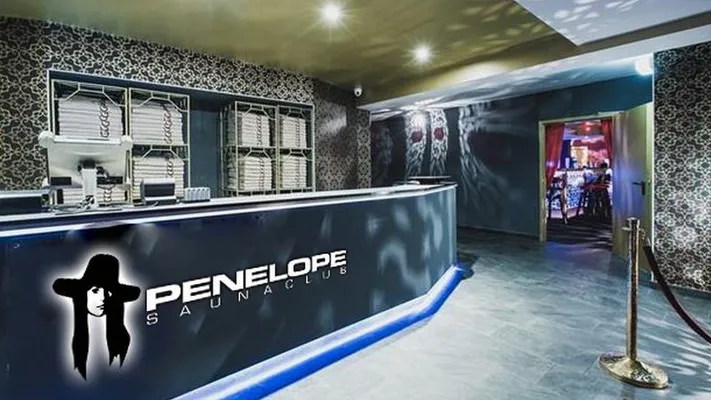
Penelope de Luxe Castrop-Rauxel (D)
Westring 233a, 44579 Castrop-Rauxel
Last updated on
Something wrong or missing?
Prices, opening times and all features · Penelope de Luxe Castrop-Rauxel (D)
Features
Yes · 6
- Outdoor area (garden)
- Adult cinema
- Finnish sauna
- Slot machines
- Soft drinks included
- Outdoor pool
No · 24
- Air conditioning
- Beer included
- Draught beer
- Card payment / ATM
- Cocktails
- Step-free access
- Food included
- Free parking
- Free Wi-Fi
- Live DJ
- Live shows
- Professional massage
- Pick-up service
- Overnight stay possible
- Valuables lockers
- Screened parking
- SM room
- Live sport on TV
- Steam bath
- Indoor pool
- Solarium
- Hot dinner
- Indoor whirlpool
- Outdoor whirlpool
More features
Size / area
Very large club
- Indoor
- 2500 m²
- Outdoor
- 1000 m²
What to expect at Penelope de Luxe Castrop-Rauxel (D)
Castrop-Rauxel
- Name origin Castrop
- casto trop (Old High German, = barn in a settlement)
- First documented mention
- 834 AD
- Name origin Rauxel
- Roukessele (Middle High German, crow meadow)
- First documented mention
- 1266 AD
- Population
- 73,000
- Area
- 51.68 km²
- Federal state
- Nordrhein-Westfalen
- Administrative region
- Münster
- District
- Recklinghausen
- Vehicle registration
- RE, CAS, GLA
- River
- Emscher
The club Penelope de Luxe is located in Castrop-Rauxel in the district of Castrop.
Over the decades, the coal and steel industry of the Ruhr region has shifted further and further into the northern sector of this industrial region. Castrop-Rauxel lies in this zone, where the decline of the mines set in last, and was strongly shaped by mining in the 19th and 20th centuries. Of the four coal mines in the city, the Zeche Erin was the last to close, in 1983. Some mining structures have been preserved as industrial monuments, such as the headframe of the Zeche Erin and the Erinturm. The city's largest employer today is the former Rütgers Chemicals GmbH, which has belonged to the Indian Rain Commodities Limited since 2013.
Castrop and Rauxel were already settled in Germanic times. Until the beginning of the 19th century only a few hundred people lived there, but with the onset of industrialisation the population rose to around 50,000 by 1920. On 1 April 1926, parts of Castrop and the Amt Rauxel merged to form the new city of Castrop-Rauxel. The city has been organised in its current municipal structure since 1 January 1975.
The oldest church in the city is the Lambertuskirche, whose origins go back to the 13th century. Sights in Castrop-Rauxel include the moated castle Wasserschloss Bladenhorst, the former manor house Haus Goldschmieding, the Burg Henrichenburg, the Taubenvatta monument, which commemorates the pigeon-breeding tradition so beloved among miners, and the old town hall. With the Erinpark and the grounds of the former horse racing track, which operated until 1970, there are two relaxing city parks right next to the old Castrop town centre.
Castrop-Rauxel has excellent transport connections. The city can be reached quickly via the motorways A2, A42, A43 and A45 and has its own main railway station. The Rhein-Herne-Kanal serves as a waterway, crossed by the Emscher near Henrichenburg, along which the city operates a marina and a total of four canal harbours.