FKK Villa Romantica Recklinghausen [RTC] (D)
Blitzkuhlenstraße 109, 45659 Recklinghausen
Last updated on
Something wrong or missing?
Prices, opening times and all features · FKK Villa Romantica Recklinghausen [RTC] (D)
Features
Yes · 1
- Finnish sauna
No · 29
- Air conditioning
- Outdoor area (garden)
- Beer included
- Draught beer
- Card payment / ATM
- Cocktails
- Step-free access
- Food included
- Free parking
- Free Wi-Fi
- Live DJ
- Live shows
- Professional massage
- Pick-up service
- Adult cinema
- Overnight stay possible
- Valuables lockers
- Screened parking
- Slot machines
- SM room
- Soft drinks included
- Live sport on TV
- Steam bath
- Indoor pool
- Outdoor pool
- Solarium
- Hot dinner
- Indoor whirlpool
- Outdoor whirlpool
More features
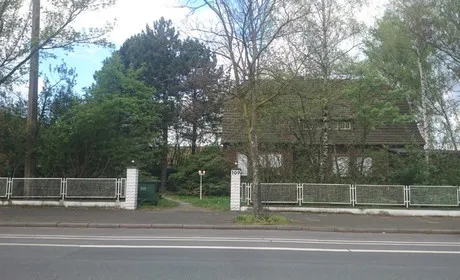
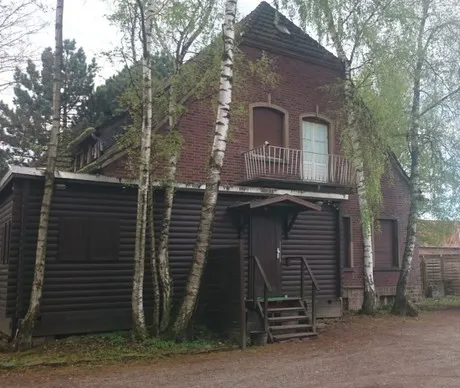
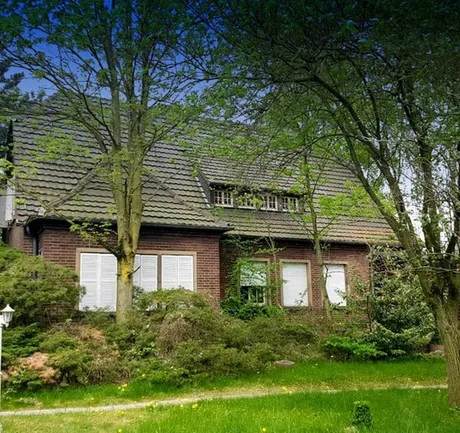
Traditional house at the former horse racing track, A2 exit Recklinghausen-Süd. Large sauna, comfortable relaxation sofas.
Size / area
Small club
- Indoor
- 350 m²
- Outdoor
- 50 m²
What to expect at FKK Villa Romantica Recklinghausen [RTC] (D)
Recklinghausen
- Name origin
- Ricoldinchuson (Germanic) --> Recklinghausen
- First documented mention
- 1017 AD
- Population
- 111,000
- Area
- 66.5 km²
- Federal state
- Nordrhein-Westfalen
- Administrative region
- Münster
- District
- Recklinghausen
- Vehicle registration
- RE, CAS, GLA
- River
- Emscher
The club FKK Villa Romantica is located in Recklinghausen-Hillerheide.
Recklinghausen is the largest city in the northern Ruhr area, it already borders the Münsterland to the north and is situated in the east of the Emscherland nature reserve. Fittingly, the Emscher, which rises near Holzwickede, also flows through the city, as does the federal waterway Rhein-Herne-Kanal.
The town was first mentioned in the year 1017 as Ricoldinchuson and was granted town rights in 1236. In 1150 the town was the centre of the so-called Vest Recklinghausen, which belonged to the Electorate of Cologne until 1802. After a brief period belonging to the Duchy of Arenberg and, from 1811, to the Grand Duchy of Berg, the town came to Prussia in 1815 and was incorporated into the Province of Westphalia.
Over the past centuries Recklinghausen has undergone numerous municipal reforms. In its current administrative structure the city has consisted, since 1 January 1975, of the 18 districts Innenstadt, Nordviertel, Speckkhorn/Bockholt, Ostviertel, Westviertel, Hochlar, Paulusviertel, Stuckenbusch, Hillerheide, Hillen, Berghausen, Grullbad, Süd, König Ludwig, Röllinghausen, Hochlarmark, Suderwich and Essel. The city is easily accessible via the A2 and A43 motorways and its main railway station, and also has access, at the border with Marl, to the Marl-Loemühle airfield. In the south of the city lies the Stadthafen Recklinghausen on the Rhein-Herne-Kanal, which in summer is also frequented as a leisure spot and hosts a beach bar.
In the 19th and 20th centuries the city was predominantly shaped by coal mining. Today it sees itself as a service and administrative city and, with its pedestrian zone and the "Palais Vest" shopping centre on the Löhrhof, is considered the shopping city of the region. Unlike most cities in the Ruhr area, Recklinghausen's city centre suffered only light damage during the war and can therefore boast, in the old town and its surroundings, a coherent ensemble of noteworthy houses and buildings with historic architecture. The cityscape is rounded off by modern experimental buildings such as the Museum Jenke and the Rondell, which stand out as individual structures in contrast to the historically grown building stock.
At the Ruhrfestspielhaus on the Grüner Hügel, a natural hill in the city's Stadtgarten, the Ruhrfestspiele takes place every year — the oldest and at the same time one of the largest and most renowned theatre festivals in Europe. The city is also home to the Neue Philharmonie Westfalen, the largest of the three state orchestras in Nordrhein-Westfalen. Further leisure options include in particular the zoo, the Westfälische Volkssternwarte with planetarium in the Stadtgarten, as well as the extensive new local recreation area Hoheward – Der Landschaftspark. The roughly 160-hectare site on the border with Herten gained nationwide attention above all thanks to the Horizontobservatorium erected on top of the spoil heap at a height of 110 metres, with its striking two steel arches touching one another.
Among Recklinghausen's well-known sons and daughters are Katherine Oppenheimer, Horst Jüssen, Dietmar Ossenberg, Steffen Brand, Werner Hansch, Frank Busemann, Renate Künast, Hape Kerkeling, Nicolas Wöhrl, Ralf Moeller, Ludger Pistor, Birte Glang and Walter Giller.