FKK Rom Münster-Altheim/Frankfurt (D)
Im Industriegebiet 9, 64839 Münster-Altheim
Laatst bijgewerkt op
Klopt er iets niet of ontbreekt er iets?
Kenmerken
Ja · 17
- Air conditioning
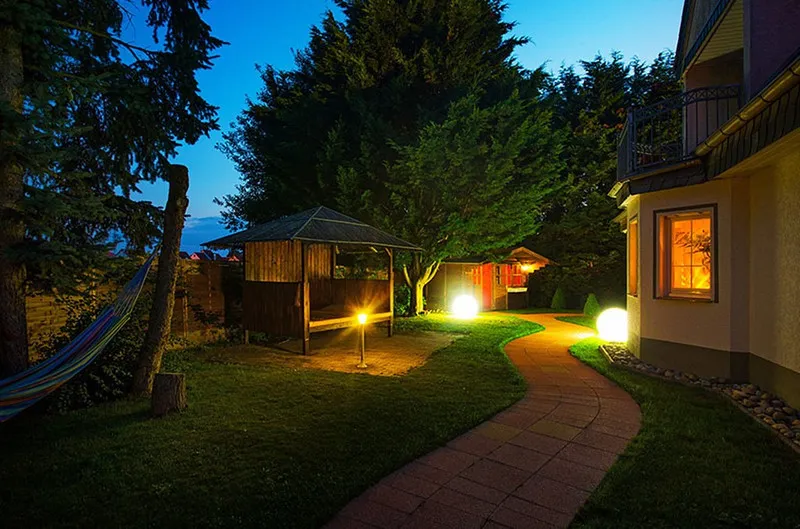
- Outdoor area (garden)
- Draught beer
- Step-free access
- Food included
- Free parking
- Professional massage
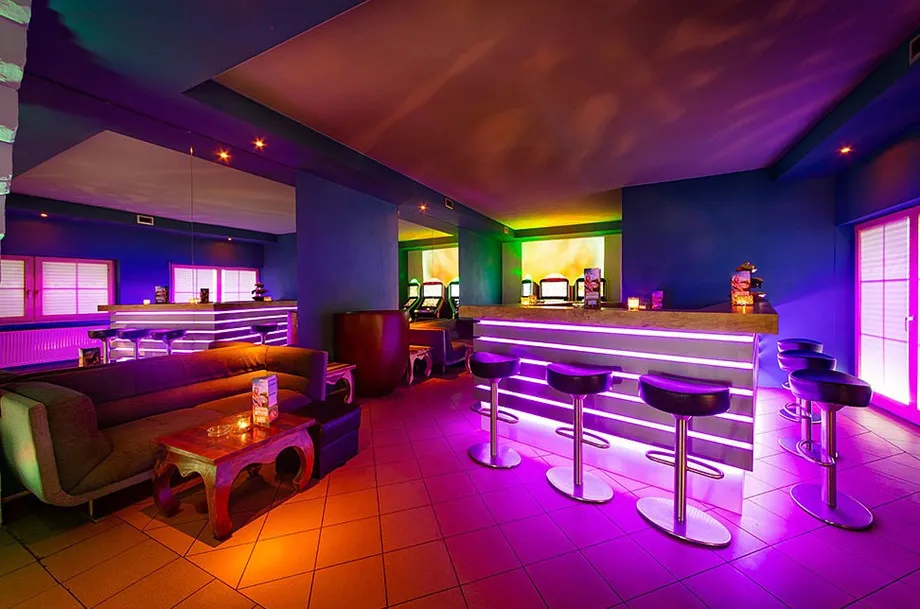
- Adult cinema
- Valuables lockers
- Finnish sauna
- Screened parking
- Slot machines
- Soft drinks included
- Live sport on TV
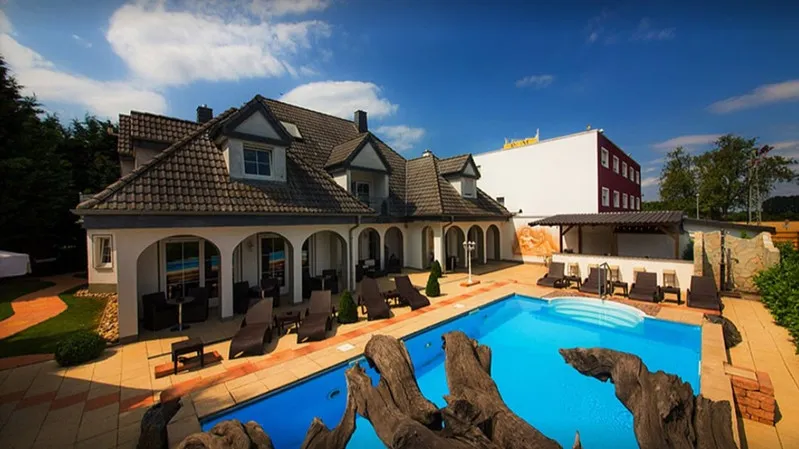
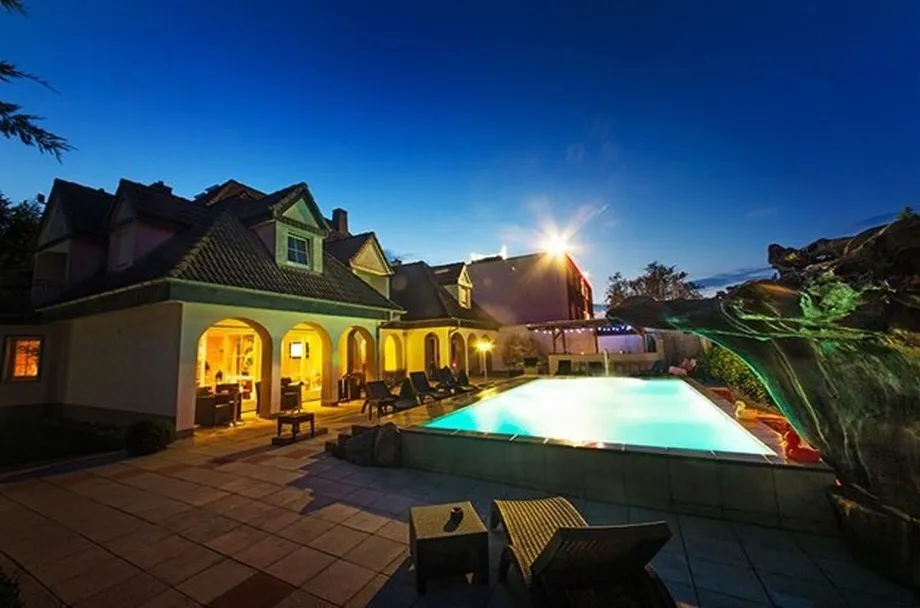
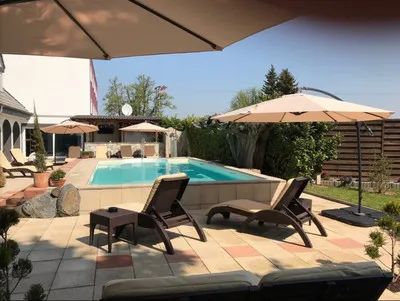
- Outdoor pool
- Hot dinner
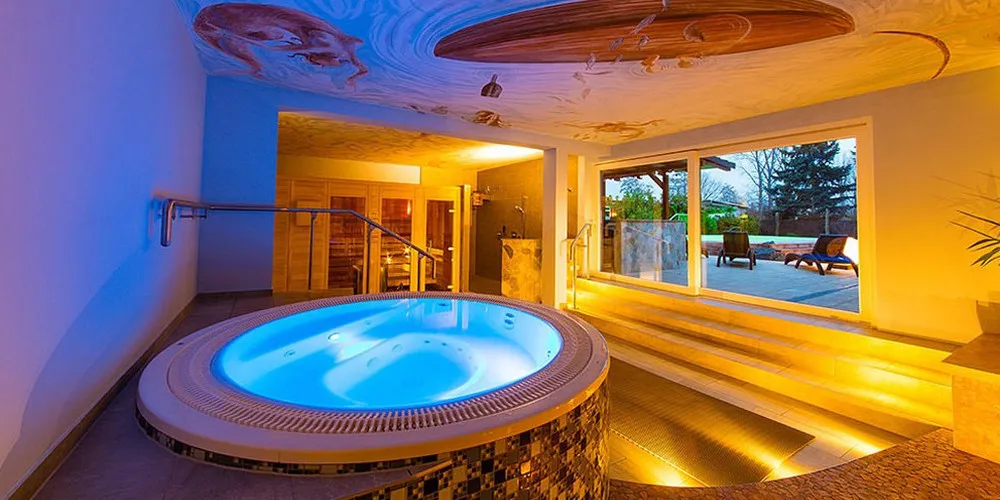
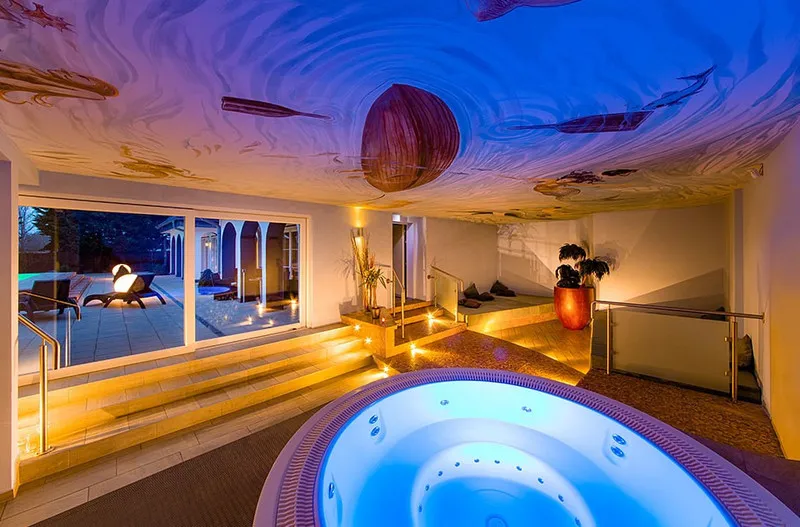
- Indoor whirlpool
Nee · 13
- Beer included
- Card payment / ATM
- Cocktails
- Free Wi-Fi
- Live DJ
- Live shows
- Pick-up service
- Overnight stay possible
- SM room
- Steam bath
- Indoor pool
- Solarium
- Outdoor whirlpool
Grootte / oppervlakte
Middelgrote club
- Binnen
- 1200 m²
- Buiten
- 500 m²
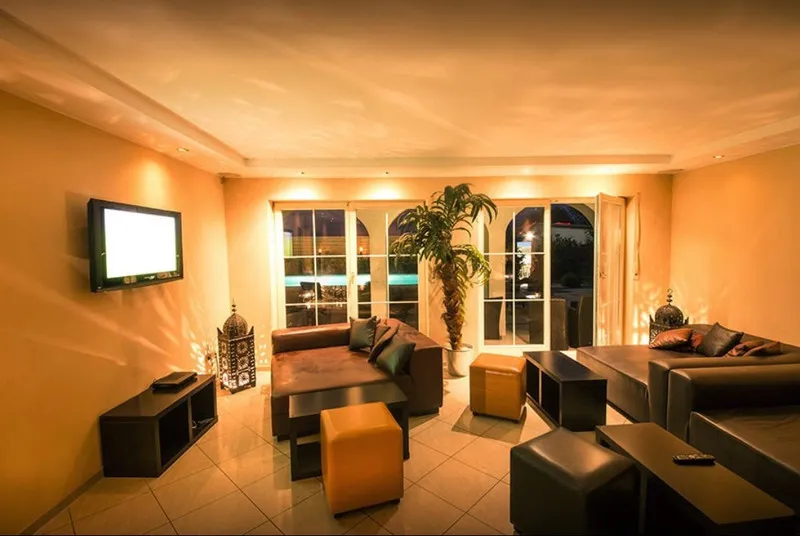
Wat je bij FKK Rom Münster-Altheim/Frankfurt (D) kunt verwachten
Münster-Altheim
- Name origin
- monasterium (Lat., = belonging to a monastery) --> Monstere
first documented mention of Münster (Hessen): 1254 AD
first documented mention of Altheim: 1317 AD
Population: 15,000 (of which Altheim 3000)
Area: 20.78 km²
Federal state: Hessen
Administrative region: Darmstadt
District: Darmstadt-Dieburg
Vehicle registration: DA, DI
River: Gersprenz, Semme
The club FKK Rom near Frankfurt is located in Münster-Altheim.
Frankfurt am Main:
It's 420 km to Berlin, 390 km to Hamburg, 150 km to Köln and 200 km to München (each as the crow flies): Frankfurt am Main is an ancient trading city in the heart of Germany which, with around 750,000 inhabitants, is smaller than the four German metropolises with a million-plus population, yet in many respects is a city of superlatives that by far outshines all other German cities in importance.
This holds true even in the literal sense: the impressive skyline of Frankfurt's skyscrapers is unique in Germany. The ten tallest buildings in Germany are, without exception, located in Frankfurt, including the Commerzbank Tower, the Messeturm, the Main Tower and the ECB building.
But Frankfurt is also one of the most important business centres in the entire world; many German or former German large corporations have or had their headquarters there, including the once world's largest chemical company Hoechst, Metallgesellschaft, VDM, Cassella, Hartmann & Braun, Degussa, VDO or Deutsche Bahn, as well as, of course, numerous banks and financial institutions, above all Deutsche Bank, Commerzbank and Deutsche Börse AG. Frankfurt is home to the largest German financial exchange, the Deutsche Bundesbank and the European Central Bank. In keeping with the significance of the old trade routes, the Frankfurter Autobahnkreuz is the busiest traffic junction in Europe, Frankfurt Airport is one of the world's most important aviation hubs, and naturally you'll also find one of Germany's most important trade fair venues here.
According to surveys, the bustling trading metropolis ranks among the big cities with the highest quality of life even in international comparison, even if negative aspects such as a relatively high crime rate and rent prices slightly tarnish the overall impression. Frankfurt is in any case not only a must for business travellers, but also draws visitors for tourism thanks to its many attractions. This starts with the historic old town backdrop near the banks of the Main with the Kaiserdom, Römerberg, Goethe-Haus and Paulskirche, all the more so since the city, in a 200-million-euro project covering an area of seven hectares, has had an ensemble of a total of 15 houses around the historic Krönungsweg reconstructed and a further 20 built in a historic style. From 1562 onwards - after the venue for royal elections and coronations moved from Aachen to Frankfurt - the Roman-German emperors took this route to the Kaiserdom until the end of the Holy Roman Empire. The Frankfurter Dom - built between 1250 and 1514 - is thus one of the most significant buildings in German imperial history. In the not-too-distant Paulskirche, meanwhile, the German National Assembly met from May 1848 to May 1849, attempting for the first time on German soil to establish a democratic-parliamentary German nation state.
A hundred years later, the city - first documented in 794 AD and once a Free Imperial City - very nearly became the capital of the young Bundesrepublik Deutschland. Even though that didn't come to pass - the city has seen rapid growth over the last few decades and brought great prosperity to its citizens. In the city centre, the above-average purchasing power of the public is reflected in the temples of consumption along one of Germany's largest shopping streets: the Frankfurter Zeil with the adjoining Goethestraße. Meanwhile, those who can afford it and wish to escape the hustle and bustle of the big city seek out residences in the idyllically situated spa towns of the neighbouring Hochtaunus: Königstein, Bad Homburg or Kronberg are home to numerous well-earning Frankfurt residents and are among the wealthiest municipalities in Germany.
For those who prefer to stay in the city, there's plenty on offer in terms of culture and leisure alone: the Oper Frankfurt, the Theater am Turm or the long-established Gallus Theater, the Museumsufer on the Sachsenhausen side of the Main with houses such as the Städel, the Liebighaus or the Museum der Weltkulturen, as well as, beyond that, a pulsating nightlife. Frankfurt is not only home to the tradition-rich football club Eintracht Frankfurt, but also the headquarters of the most important German sports associations such as the Deutscher Fußball-Bund (DFB), Deutscher Olympischer Sportbund (DOSB), Deutscher Turner-Bund (DTB) or Deutscher Motor Sport Bund (DMSB).
Among the well-known sons and daughters of Frankfurt are numerous members of the banking dynasties Rothschild and Oppenheim(er), Caspar & Maria Sibylla Merian, as well as Theodor W. Adorno, Bettina von Arnim, Heinrich Hoffmann, Friedrich Wöhler, Otto Emil Hahn, Arthur Schopenhauer and Johann Wolfgang von Goethe, Heinrich Hoffmann, Erich Fromm, Anne Frank, Wolfdietrich Schnurre, Albert Mangelsdorff, Dieter Wedel, Wolfgang Spier, Marika Kilius, Jean Frankfurter, Michael Groß, Thor Kunkel, Hans Zimmer, Peter Kloeppel, Hannes Jaenicke, Birgit Prinz, Jessica Wahls, Namika, Sonya Kraus, Moses Pelham and Sabrina Setlur.
Münster-Altheim:
Since their origins in the Middle Ages, Münster and Altheim each belonged to the territories of various local counties residing there and, in part, also to Kurmainz. The last principality within whose territory they fell was the Großherzogtum Hessen at the time of the Wiener Kongress in 1815. From around 1832, administrative responsibility for both localities lay with the (Land-) Kreis Dieburg. Altheim, with its close to 3000 inhabitants, has formed the municipality of Münster (Hessen) together with the main town of Münster since 1971, to which the district of Breitefeld, created in 1997, also now belongs.