

FKK Feigenblatt Worms (D)
Römerstraße 2a, 67547 Worms
Laatst bijgewerkt op
Klopt er iets niet of ontbreekt er iets?
Kenmerken
Ja · 10
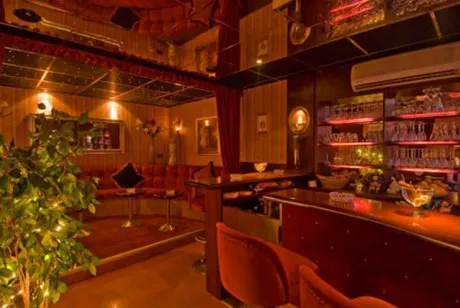
- Air conditioning
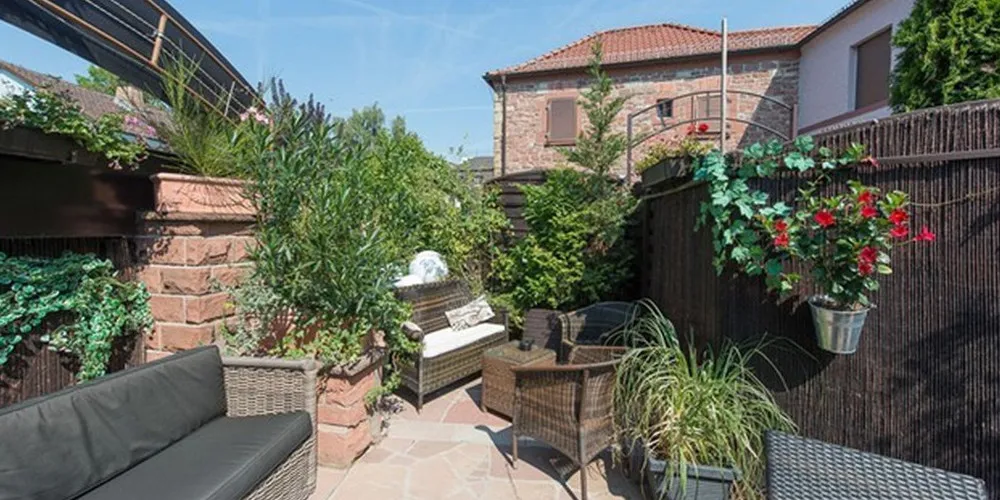
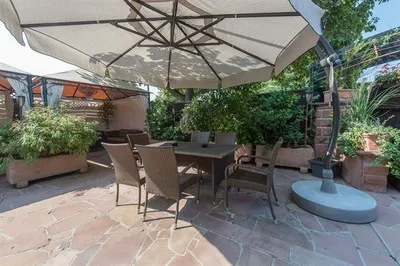
- Outdoor area (garden)
- Card payment / ATM
- Free parking
- Adult cinema
- Finnish sauna
- Slot machines
- Live sport on TV
- Steam bath
- Indoor pool
Nee · 20
- Beer included
- Draught beer
- Cocktails
- Step-free access
- Food included
- Free Wi-Fi
- Live DJ
- Live shows
- Professional massage
- Pick-up service
- Overnight stay possible
- Valuables lockers
- Screened parking
- SM room
- Soft drinks included
- Outdoor pool
- Solarium
- Hot dinner
- Indoor whirlpool
- Outdoor whirlpool
Meer kenmerken
Grootte / oppervlakte
Kleine club
- Binnen
- 700 m²
- Buiten
- 100 m²
Wat je bij FKK Feigenblatt Worms (D) kunt verwachten
Worms
- Name origin
- Borbetomagus (Celtic, = water, spring)
- First documented mention
- occupied by the Romans since Augustan times and a Roman military base from the beginning of the 1st century AD
- Population
- 84,000
- Area
- 108.73 km²
- Federal state
- Rheinland-Pfalz
- Vehicle registration
- WO
- River
- Rhein
The club FKK Feigenblatt is located in Worms Innenstadt-Süd.
It was perhaps the last great hour in the life of the great Palatinate statesman: with his own characteristic, somewhat sentimental, and in any case great reverence for great German history, Helmut Kohl chose the Großer Zapfenstreich in front of the Dom zu Speyer for his farewell from statesmanly offices and honours in 1998. Of course, the spectacle could just as easily have taken place in Worms, about 35 km further north. The two cities are not dissimilar and hold a similarly great significance for German history. What makes these two, in themselves tranquil, cities in the Oberrheinische Tiefebene so significant?
Worms and Speyer, together with Mainz, are the cities of the three Romanesque imperial cathedrals on the Rhein. The Mariendom in Speyer is the largest surviving Romanesque church in the world and has been a UNESCO World Heritage Site since 1981. The Wormser Dom, built between 1130 and 1181, is smaller and about a hundred years younger than the cathedrals in Speyer and Mainz. It is connected to the papal nomination of Leo IX in 1048, the Wormser Konkordat of 1122, which ended the Investiturstreit; the wedding of Emperor Friedrich II to Isabella of England in 1235; and the Reichstag zu Worms of 1521, during which Martin Luther had to answer before Emperor Karl V, which led to the split in the Western church. Worms is therefore also considered an important Lutherstadt. As early as the 9th century, Worms became the winter residence of Karl der Große; during this time, Reichstage of the Frankish Empire were also held there. In 1076, King Heinrich IV declared in Worms that Pope Gregor VII was deposed, which led to the Gang nach Canossa. Worms also plays an outstanding role in the Nibelungensaga and is therefore regarded as the quintessential Nibelungenstadt, which is commemorated in Worms through many namings, buildings, museums and festivals.
Speyer was a free imperial city in the Middle Ages and one of the most important cities of the Heiliges Römisches Reich Deutscher Nation. The construction of the Dom zu Speyer was already commissioned around 1025 by the Salian king and later emperor Konrad II, with the aim of building the largest church in the Western world. Buried in its crypt, among others, are Konrad II and his wife Gisela von Schwaben, Heinrich III, Heinrich IV and his wife Bertha von Savoyen, Heinrich V, Beatrix von Burgund, the second wife of Friedrich Barbarossa, and their daughter Agnes, as well as Philipp von Schwaben, the son of Friedrich Barbarossa, Rudolf von Habsburg and Adolf von Nassau. Speyer moved into the centre of German history in the 16th century, when over 50 Hoftage, 5 Reichstage as well as several Reichsdeputationstage, Kurfürstentage and Reichsmoderationstage took place there. At the Reichstag of 1529, the Protestant princes protested against the imposition of the Reichsacht on Martin Luther, from which the term Protestantism developed.
Worms and Speyer both emerged from Celtic settlements which, in Roman times, served as military bases for the troops moving in there. From Worms, the settlement of Borbetomagus arose in this way in the post-Augustan period in the 1st century, while in Speyer the town of Noviomagus emerged around 150 AD. Today, Worms competes with Augsburg, Trier and Kempten for the title of the oldest city in Germany.
Both Worms and Speyer, with their direct location on the Rhein, are shaped by the history, tradition and legendary character of the great German river. Worms is assigned to the two planning regions Rheinpfalz and Rheinhessen-Nahe, while Speyer is part of the Metropolregion Rhein-Neckar, centred on Ludwigshafen, Mannheim and Heidelberg. To the west, the Deutsche Weinstraße and the Pfälzerwald border both cities.
Speyer and Worms look back together on a long and eventful history and have maintained friendly and partnership relations with each other since 1208 (!).