Casa Erotica Ulm (D)
(formerly FKK Morgenland)
Steinbeisstraße 22, 89079 Ulm
Last updated on
Something wrong or missing?
Features
Yes · 12
- Air conditioning
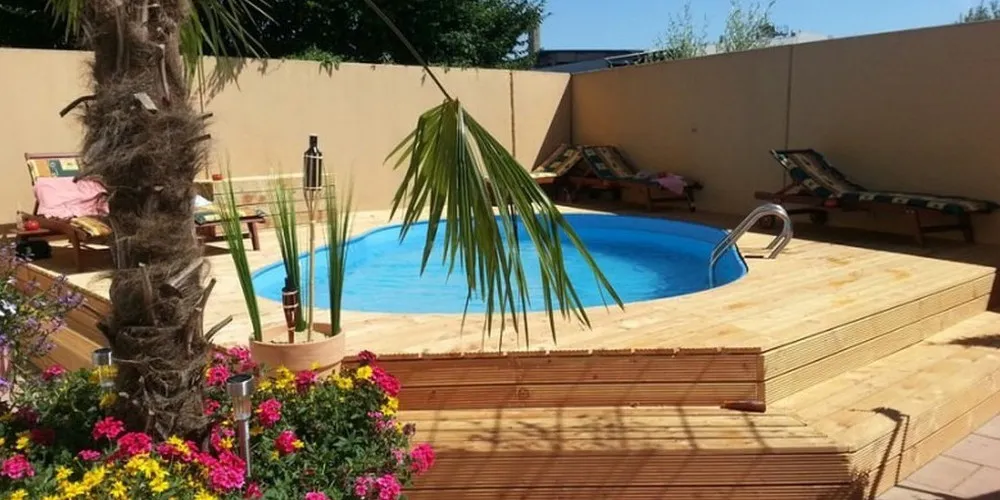
- Outdoor area (garden)
- Draught beer
- Card payment / ATM
- Professional massage
- Adult cinema
- Finnish sauna
- Screened parking
- Slot machines
- Soft drinks included
- Live sport on TV
- Indoor whirlpool
No · 18
- Beer included
- Cocktails
- Step-free access
- Food included
- Free parking
- Free Wi-Fi
- Live DJ
- Live shows
- Pick-up service
- Overnight stay possible
- Valuables lockers
- SM room
- Steam bath
- Indoor pool
- Outdoor pool
- Solarium
- Hot dinner
- Outdoor whirlpool
More features
Size / area
Medium-sized club
- Indoor
- 1200 m²
- Outdoor
- 100 m²
What to expect at Casa Erotica Ulm (D)
Ulm
- Name origin
- Hulma (Germanic, name for a body of water)
- First documented mention
- 854 AD
- Population
- 126,000
- Area
- 118.69 km²
- Federal state
- Baden-Württemberg
- Administrative region
- Tübingen
- District
- /
- Vehicle registration
- UL
- River
- Blau-->Danube, Iller-->Danube
The club FKK Morgenland is located in Ulm-Donautal.
Ulm and Neu-Ulm are historically one and the same city. In 1810, under pressure from Napoleon, Bavaria ceded sovereignty over Ulm to Baden-Württemberg and kept only the part of the city on the right bank of the Danube, which has been called Neu-Ulm since 1811. The once proud and splendid Free Imperial City was founded as a royal palatinate in 850. Ulm's landmark is of course the world-famous Minster, construction of which began in 1377 and whose 161.53 metre church tower is the tallest in the world. Between 1500 and 1800, Ulm was one of the richest and most flourishing cities on German soil; right up to World War II it had one of the most significant and largest old towns in all of southern Germany. From that era, today's old town alleys still bear witness alongside the Minster: the mighty historic Renaissance town hall with its frescoes and astronomical clock, the oldest surviving buildings – the Nikolauskapelle and Steinhaus – the city wall with the Gänsturm and Metzgerturm towers, the Schwörhaus, and the wonderfully restored idyllic Fishermen's and Tanners' Quarter with the Schiefes Haus, the crookedest hotel in the world, on the Blau where it flows into the Danube.
How does Ulm tick? Where can you get a real feel for "the Ulm way"? The former administrative seat of the Swabian League, founded in 1488 and back then an expression of economic and political weight within the Empire, is today a city of contrasts, yet at the same time loyally bound up in the once-forced duality between Ulm and Neu-Ulm. Ulm is manageable in size, in that sense quite the Swabian province — but far removed from provincialism. Above all, this city on the Danube is a thriving research and business hub bursting with self-confidence. The commercial vehicle manufacturers Magirus and Kässbohrer hail from here, as do the pharmaceutical company Ratiopharm, garden tool maker Gardena and adhesive producer Uzin Utz; carmakers Daimler, Audi and BMW run their research centres here, as do Continental and Nokia Networks. The city's proud history shapes the character and mentality of its people, who — caught between Swabian down-to-earthness and a leaning towards global players — have developed their own identity and know that the city, nestled between the natural paradise of the Swabian Alb and the Danube, Europe's fateful river, has more to offer than just the tallest church tower in the world.
Well-known sons and daughters of Ulm and Neu-Ulm include Albrecht Ludwig Berblinger, Conrad Dietrich Magirus, Albert Einstein, Karl Kässbohrer, Helmut Schmid, Wolfgang Reitzle, Erhard Eppler, Otl Aicher, Hildegard Knef, Mike Krüger, Ursula Karven, Uli & Dieter Hoeneß, Amelie Fried and Harald Schmidt.