


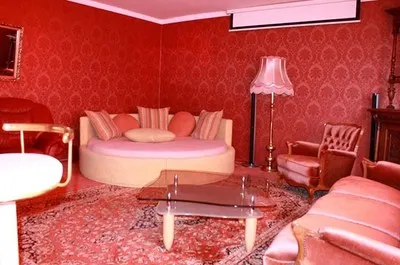
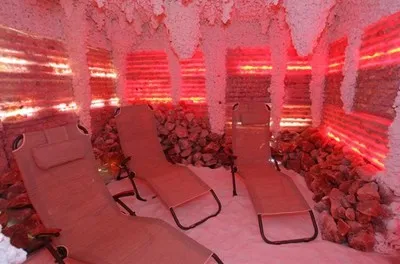
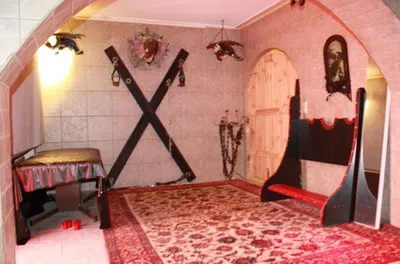
Palm Beach Bad Hersfeld (D)
Erfurter Strasse 7a, 36251 Bad Hersfeld
Last updated on
Something wrong or missing?
This club has closed for good.
Clubs nearby · Palm Beach Bad Hersfeld (D)
Prices, opening times and all features · Palm Beach Bad Hersfeld (D)
Features
Yes · 11
- Beer included
- Draught beer
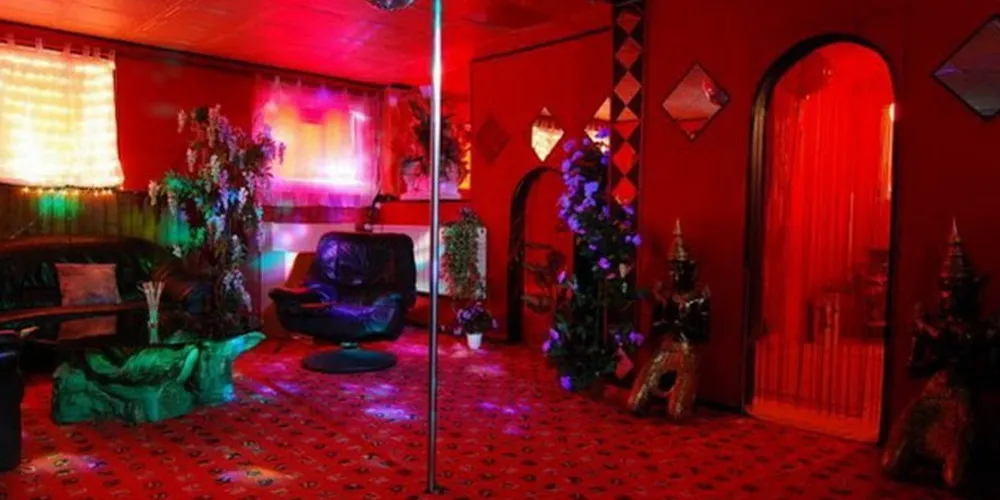
- Live shows
- Adult cinema
- Finnish sauna
- Screened parking
- SM room
- Soft drinks included
- Steam bath
- Indoor pool
- Indoor whirlpool
No · 19
- Air conditioning
- Outdoor area (garden)
- Card payment / ATM
- Cocktails
- Step-free access
- Food included
- Free parking
- Free Wi-Fi
- Live DJ
- Professional massage
- Pick-up service
- Overnight stay possible
- Valuables lockers
- Slot machines
- Live sport on TV
- Outdoor pool
- Solarium
- Hot dinner
- Outdoor whirlpool
More features
Size / area
Medium-sized club
- Indoor
- 1000 m²
What to expect at Palm Beach Bad Hersfeld (D)
Bad Hersfeld
- Name origin
- Haerulfisfelt (Germanic, = field of Haerulf)
- First documented mention
- 736 AD
- Population
- 30,000
- Area
- 73.82 km²
- Federal state
- Hessen
- Administrative region
- Kassel
- District
- Hersfeld-Rotenburg
- Vehicle registration
- HEF, ROF
- River
- Haune --> Fulda, Solz --> Fulda, Geis --> Fulda
The club Palm Beach is located in Bad Hersfeld-Hohe Luft.
The spa town of Bad Hersfeld lies in the Hersfeld Basin, formed by the confluence of the Fulda and the Haune, between the Vogelsberg to the southwest, the Knüllgebirge to the northwest and the Seulingswald to the northeast. The city's territory shows a considerable geographical gradient: the lowest point lies at 195 m above sea level at the mouth of the Solz into the Fulda; the highest point within the municipal boundary is the Laxberg at 408 m above sea level.
According to written tradition, the history of Bad Hersfeld began with the monk Sturmius, who in 736 built a monastic hermitage in Haerulfisfelt, and with Lullus, who in 769 founded the Benedictine monastery of Hersfeld at the same site. Both were students of the missionary bishop Boniface. Hersfeld was first mentioned as a market town in 1142 and as a city in 1170. This period also marked the height of the Hersfeld Abbey's political significance within the Empire. From 1373 onwards, the Landgraviate of Hesse gained influence over the city through protective alliances. During the Vitalisnacht of 1378, the power struggle between the abbey and the city reached its climax. In 1439, large parts of the city were destroyed by fire. The oldest half-timbered house in the city is therefore the Küsterhaus from 1452. Abbot Ludwig V. (1571–1588) triggered the last great building boom the city would see for centuries, having the abbey buildings extended and remodelled in the Weser Renaissance style. These can still be seen throughout the old town today, such as the former mint or Schloss Eichhof.
After the death of the last abbot in 1606 and the Peace of Westphalia in 1648, the princely Imperial Abbey of Hersfeld was awarded to the secular Landgraviate of Hesse-Kassel; after the Napoleonic years, it became the county seat of the Landkreis Hersfeld in Kurhessen in 1821. Since 1949 the city has been allowed to call itself Bad Hersfeld, and since 1963 it has been a Hessian state spa. Following the merger of the former districts of Hersfeld and Rotenburg as part of the territorial reform in Hessen on 1 August 1972, Bad Hersfeld was designated the county seat of the newly formed district of Hersfeld-Rotenburg.
The spa operations with Kurtherme and Kurhaus, Wandelhalle and Quellpavillon in the Kurpark, as well as the spa clinics, are harmoniously integrated into the charming townscape of Bad Hersfeld, whose old town is particularly characterised by buildings in the Weser Renaissance style. In the scenically charming surroundings there is a well-developed network of cycling and hiking trails, including the Große Bad Hersfelder Wanderweg, the Wildbahn, the Lulluspfad, the Fuldahöhenweg, the Fuldatalweg and the Kurze Hessen, as well as the Fulda-Radweg, the Lahn-Werra-Radweg and the D-Route 9 (Weser-Romantische Straße).
Beyond the region, Bad Hersfeld is known above all for the Bad Hersfelder Festspiele, held every year since 1951 in the Stiftsruine, the largest Romanesque church ruin in Europe. The Bad Hersfelder Festspiele take place annually from mid-June to early August and have earned the city its reputation as the "Salzburg of the North". Every year at the Festspiele, the Hersfeld-Preis and an audience award are presented.