Big Spender Kassel (D)
Dennhaeuser Strasse 71, 34134 Kassel
Last updated on
Something wrong or missing?
Prices, opening times and all features · Big Spender Kassel (D)
Features
Yes · 4
- Outdoor area (garden)
- Free parking
- Finnish sauna
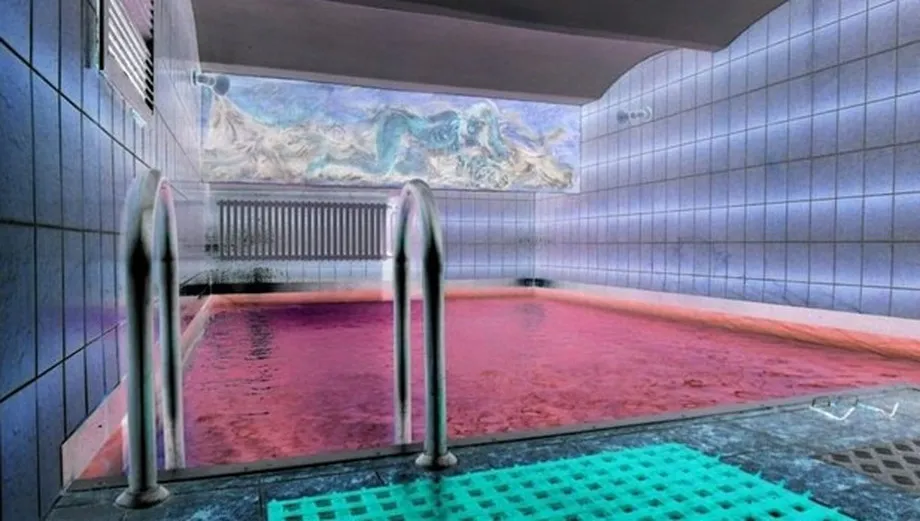
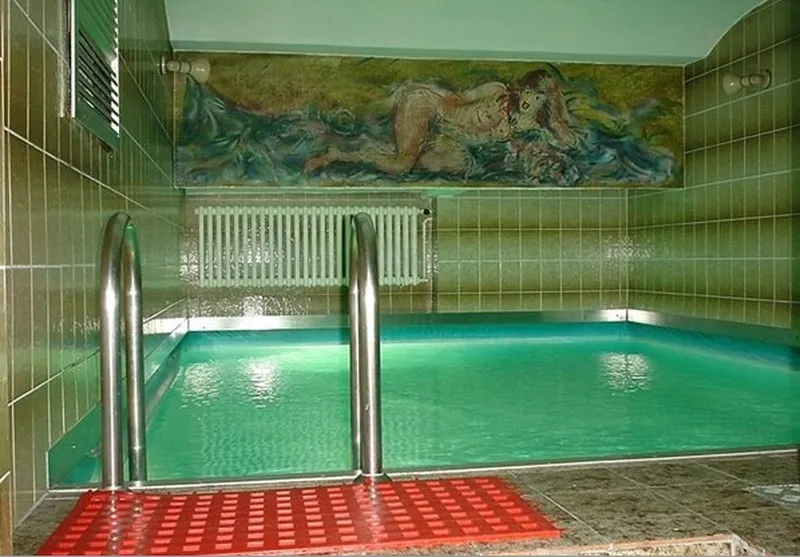
- Indoor pool
No · 26
- Air conditioning
- Beer included
- Draught beer
- Card payment / ATM
- Cocktails
- Step-free access
- Food included
- Free Wi-Fi
- Live DJ
- Live shows
- Professional massage
- Pick-up service
- Adult cinema
- Overnight stay possible
- Valuables lockers
- Screened parking
- Slot machines
- SM room
- Soft drinks included
- Live sport on TV
- Steam bath
- Outdoor pool
- Solarium
- Hot dinner
- Indoor whirlpool
- Outdoor whirlpool
More features
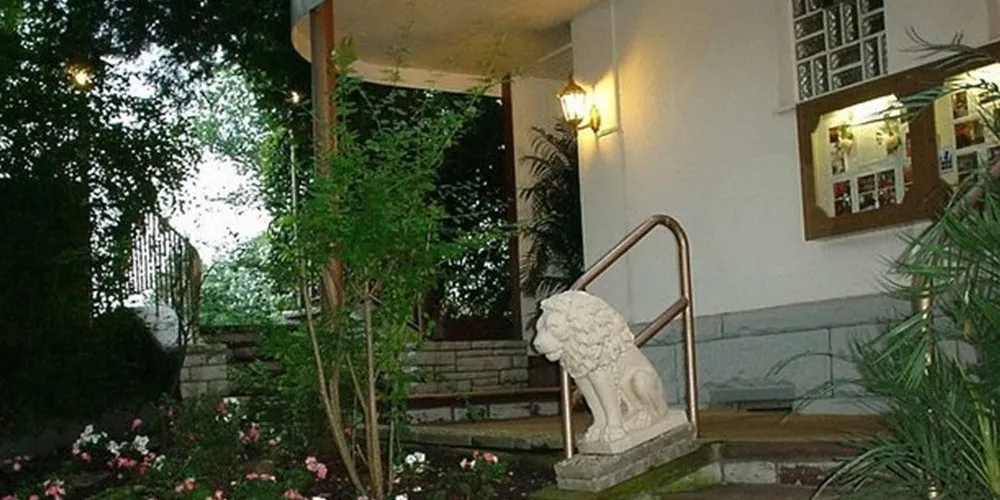
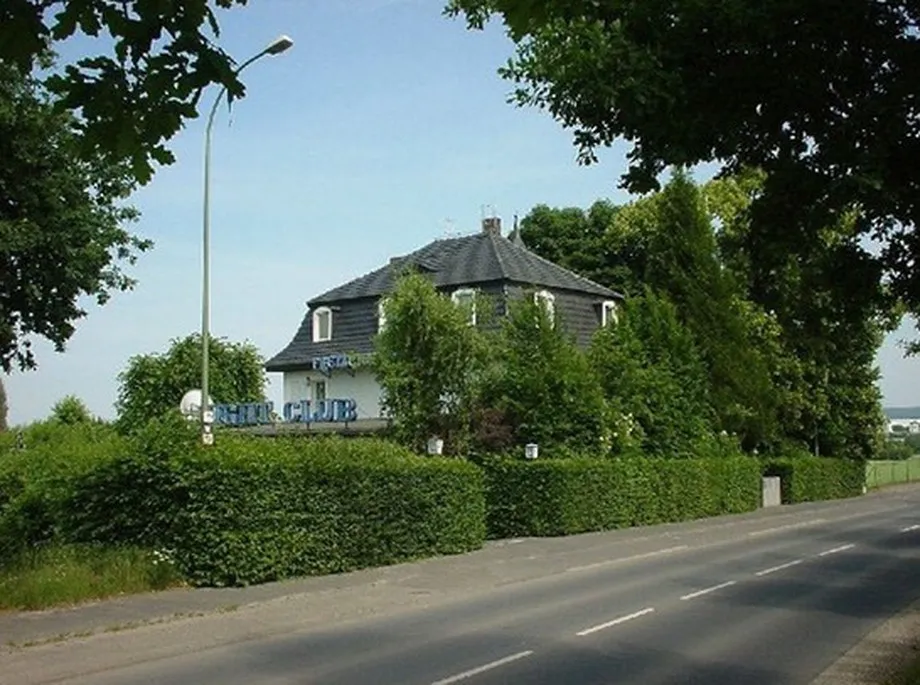
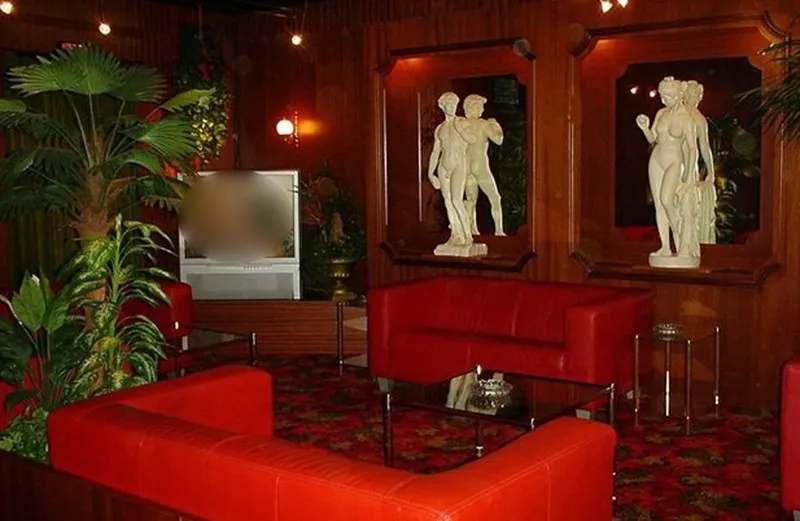
Detached house with trees and a large car park, near the A49 (exit Kassel-Niederzwehren). Sauna, pool, snack bar, outdoor pavilion for smokers.
Size / area
Large club
- Indoor
- 1500 m²
- Outdoor
- 500 m²
What to expect at Big Spender Kassel (D)
Kassel
- Name origin
- Chassalla [meaning disputed; castellum (Lat., = fortification); or: kas- (Germanic, = hollow/basin) -sella (from sali, Germanic, = building)] --> Cassel
- First documented mention
- 913 AD
- Population
- 202,000
- Area
- 106.78 km²
- Federal state
- Hessen
- Administrative region
- Kassel
- Vehicle registration
- KS
- River
- Fulda
The club Big Spender is located in Kassel-Niederzwehren/Neue Mühle.
Kassel - that sounds suspiciously like either a Hessian mountain province, a local cured meat speciality, or a French actor. But you'd be hard pressed to mistake it for any of those - Kassel is a city whose former absolutist splendour still shines through in many places and which can easily hold its own alongside the other major Hessian cities. As for the cured meat - that's not actually a Kassel speciality at all, it was named after the Berlin butcher Cassel, whose name is spelled just like that of the French actor.
What is true, however, is that Kassel lies almost at the geographic centre of Germany, nestled in a basin valley that is scenically framed by the low mountain ranges of the Habichtswald to the west, the southern foothills of the Reinhardswald to the northeast, the Kaufunger Wald to the east, and the Söhre to the south. The view from the so-called Herkules over the city, whose landmark it is and which stands west of Kassel on the Wilhelmshöhe, is, to put it mildly, uplifting.
This already names some of Kassel's greatest sights. The Kasseler Wilhelmshöhe is a landscape park of world renown and a UNESCO World Heritage Site; it is the largest designed mountain park in Europe and houses the Herkules with its water features and cascades, Schloss Wilhelmshöhe, and the artificial ruin Löwenburg. The Herkules is a copper statue of the Greek demigod Herakles and stands on the same sightline as Schloss Wilhelmshöhe, at a height of 515 m. The palace is an imposing classicist building completed shortly after the French Revolution. The builders of the initially baroque park grounds, which were later refined with elements of an English landscape garden, were primarily the Landgraves Karl and Wilhelm IX.
Another grand baroque park, the Hessian state park Karlsaue, is located in Kassel's Südstadt and houses the Orangerie with the Museum for Astronomy and the History of Technology, the Marmorbad, and the flower island Siebenbergen. On the opposite bank of the Fulda lies a third large park, the Fuldaaue, which was laid out for the 1981 Bundesgartenschau.
As in so many German cities, Kassel's old town was irretrievably destroyed in the Second World War; nevertheless, impressive buildings and sights remain, including the Ottoneum - the first purpose-built theatre building in Germany - as a representative structure of the baroque residential city of Kassel, the Fridericianum, the Marstall, the Ständehaus, the Rathaus, and a rich museum landscape. On the last series of 1000-DM banknotes, alongside the portrait of the Brothers Grimm - who hailed from Hanau but worked significantly in Kassel - several of the aforementioned buildings can be found. They bear witness to a proud past.
Around 1189, the settlement that had already existed for nearly 300 years on the site of present-day Kassel was granted town rights. In 1277, Kassel became the main residence of the first Hessian Landgrave, Heinrich I, of the newly created Landgraviate of Hesse, which embodied the sovereign order in Kassel for the following centuries. It was only under Napoleonic occupation in 1813 that Kassel became the capital of the newly founded Kingdom of Westphalia, ruled by Napoleon's brother Jérôme. After the retreat of the Bonapartes, Kassel reverted to Kurhessen, until it finally came under Prussian domain after the lost German War of 1866. Given the city's charming location, the Kaiser's family thereafter spent the summer months in Kassel.
Kassel's exposed position on the former inner-German border also made the city a candidate for the new capital of the Federal Republic of Germany after the Second World War. After the fall of the Wall, the city's regained central geographic position in the heart of a reunified Germany came into focus for transport planning; near Kassel, the three motorways A7, A44 and A49 intersect, and for rail traffic, the newly built Bahnhof Kassel-Wilhelmshöhe was opened in 1991, which is a central hub in ICE long-distance rail traffic.
Numerous significant industrial companies have established branches in Kassel. Originally from Kassel are the petroleum company Wintershall, the natural gas supplier Wingas, the potash and salt producer K+S, and SMA Solar Technology AG. Kassel is home to the Bundessozialgericht, the Universität Kassel, and the documenta, the world's most significant series of exhibitions for contemporary art.
Among Kassel's well-known sons and daughters, besides numerous descendants of Hessian noble families, are Philip Scheidemann, Elisabeth Selbert, Paul Julius Reuter, Ludwig Mond, Ulrike Folkerts, Hans Eichel, Arnold Bode, Holger Börner, and Brigitte Zypries.