FKK Tantra Kaiserslautern (D)
Gienanthstraße 15, 67663 Kaiserslautern
Last updated on
Something wrong or missing?
This club has closed for good.
Clubs nearby · FKK Tantra Kaiserslautern (D)
Prices, opening times and all features · FKK Tantra Kaiserslautern (D)
Features
Yes · 9
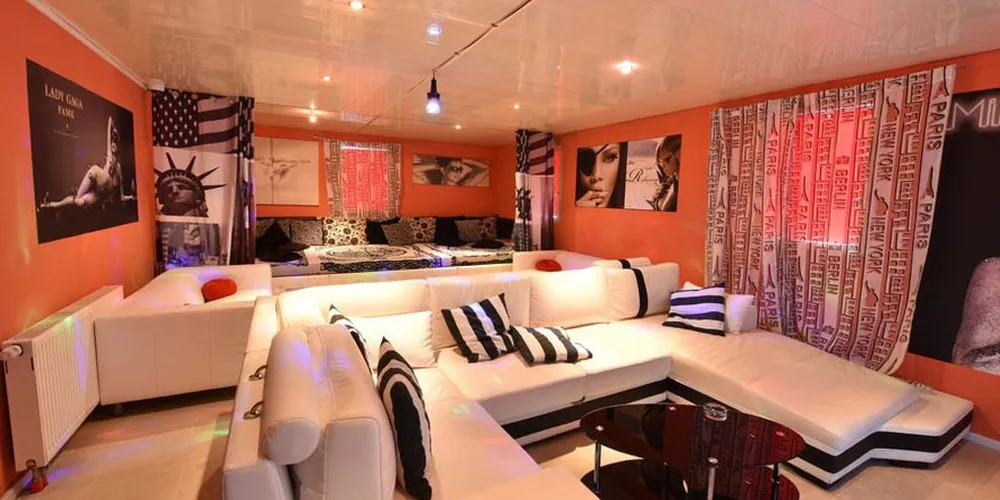
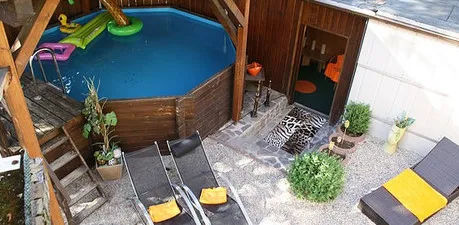
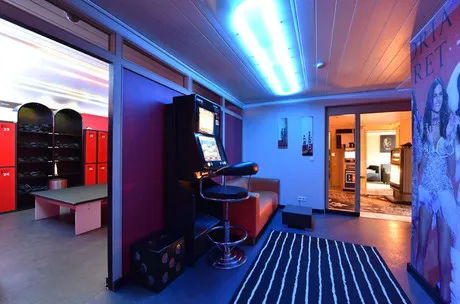
- Outdoor area (garden)
- Card payment / ATM
- Adult cinema
- Finnish sauna
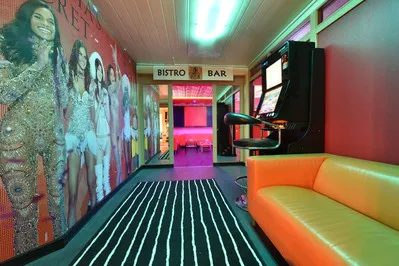
- Slot machines
- Soft drinks included
- Outdoor pool
- Solarium
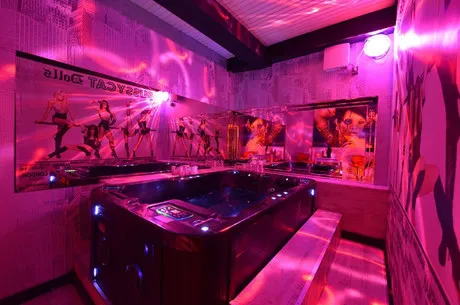
- Indoor whirlpool
No · 21
- Air conditioning
- Beer included
- Draught beer
- Cocktails
- Step-free access
- Food included
- Free parking
- Free Wi-Fi
- Live DJ
- Live shows
- Professional massage
- Pick-up service
- Overnight stay possible
- Valuables lockers
- Screened parking
- SM room
- Live sport on TV
- Steam bath
- Indoor pool
- Hot dinner
- Outdoor whirlpool
More features
Size / area
Small club
- Indoor
- 400 m²
- Outdoor
- 100 m²
What to expect at FKK Tantra Kaiserslautern (D)
Kaiserslautern
- Name origin
- luthra (Old High German, = bright, clear)
- First documented mention
- 830 AD; 1130 AD Kaiserpfalz; first documented as "Keyserslutern" in 1322 AD
- Population
- 100,000
- Area
- 139.74 km²
- Federal state
- Rheinland-Pfalz
- Vehicle registration
- KL
- River
- Lauter
The club FKK Tantra is located in Kaiserslautern-Bahnheim.
Kaiserslautern lies on the north-western edge of the Pfälzerwald in the Kaiserslautern basin, is the largest city by area in Rheinland-Pfalz and is easily accessible via the A6 motorway and its main railway station. The Kaiserslautern Military Community in and around Kaiserslautern, with around 50,000 US military personnel, forms the largest US military base worldwide outside the United States.
Kaiserslautern is a university city and the "Barbarossa city". It was already a royal court in Carolingian times; in 1152 Emperor Friedrich I Barbarossa had a Pfalz built here; in 1276 Rudolf von Habsburg granted the town of Lautern its municipal charter. However, the Free City passed around 1313 to the counts Georg von Veldenz and Gottfried von Leiningen, from there in 1322 to King Johann of Bohemia, and from 1375 the town, now called Kaiserslautern, was pledged to the Electoral Palatinate. During the Napoleonic era the city came under French rule; after the Wars of Liberation, the Palatinate, and with it Kaiserslautern, became Bavarian in 1816. Finally, in the Revolution of 1849, the Provisional Government of Kaiserslautern proclaimed the independence of the Palatinate from Bavaria. After 1850, the city developed into the most important industrial location in the Palatinate through the founding of establishments such as the worsted spinning mill and the Pfaff sewing machine factory.
Today, Kaiserslautern sees itself in particular as a research location. The PRE-Uni-Park is home to the Fraunhofer Institute for Industrial Mathematics, the Fraunhofer Institute for Experimental Software Engineering, the Fraunhofer Institute for Physical Measurement Techniques, the Max Planck Institute for Software Systems, the German Research Center for Artificial Intelligence and the Institute for Surface Analytics. Kaiserslautern is also home to the engine and components plant of Adam Opel AG, on whose factory premises GKN Gelenkwellenwerk Kaiserslautern GmbH is also located, as well as Corning GmbH, which likewise belongs to the automotive sector, plus Euromaster GmbH and the Keiper Recaro Group, an international manufacturer of automotive and aircraft seats.
In the cityscape one can still find remarkable buildings from the Middle Ages and the early modern period, such as the Protestant Stiftskirche and the Catholic Martinskirche, as well as remains of the Barbarossaburg with the Casimirsaal. Around St.-Martins-Platz in the centre of the old town there is still an ensemble of baroque buildings. The two best-known castles within the city area are Burg Hohenecken and, east of the city, Burg Beilstein.
Well-known personalities born in Kaiserslautern include the entrepreneurs Georg Michael Pfaff and Philipp Karcher, the presenter Stephanie Tücking, the footballers Fritz and Ottmar Walter, Hans-Peter Briegel and Mathias Abel, the sports journalist Rudi Michel and the FIFA referee Markus Merk.