Palladium Au (CH)
Feldstrasse 7b, 9434 Au
Last updated on
Something wrong or missing?
Prices, opening times and all features · Palladium Au (CH)
Features
Yes · 11
- Air conditioning
- Outdoor area (garden)
- Card payment / ATM
- Live shows
- Professional massage
- Adult cinema
- Finnish sauna
- Soft drinks included
- Indoor pool
- Outdoor pool
- Indoor whirlpool
No · 19
- Beer included
- Draught beer
- Cocktails
- Step-free access
- Food included
- Free parking
- Free Wi-Fi
- Live DJ
- Pick-up service
- Overnight stay possible
- Valuables lockers
- Screened parking
- Slot machines
- SM room
- Live sport on TV
- Steam bath
- Solarium
- Hot dinner
- Outdoor whirlpool
More features
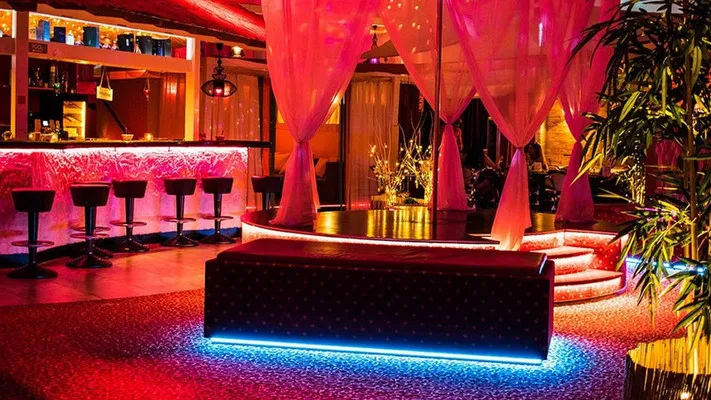
Sauna indoors and outdoors, pools indoors and outdoors, whirlpool, bistro, cinema, show dance, cigar and whisky lounge, outdoor terrace, air-conditioned club. Themed rooms (erotic, spa, show and meeting rooms). Masseur on Wed and Thu. Couples welcome.
Size / area
Large club
- Indoor
- 1900 m²
- Outdoor
- 100 m²
What to expect at Palladium Au (CH)
Au
- Name origin
- Diken Auwe (old floodplain settlement)
- First documented mention
- 1316 AD
- Population
- 8,000
- Area
- 4.69 km²
- Canton
- St. Gallen
- Electoral district
- Rheintal
- Vehicle registration
- SG
- River
- Rhein
The Club Palladium is located in Au, south of the train station.
Au is a political municipality in the St. Galler Rheintal in the canton of St. Gallen. It lies directly on the Rhein at 405 m above sea level and is easily reached via the A13 motorway and the Au (SG) train station. Here the Rhein forms the Swiss-Austrian national border. A bridge leads across to the neighbouring Vorarlberg town of Lustenau. The municipality of Au consists of the settlement centres Au, Haslach, Hard, Monstein, as well as the hamlet of Oberfahr and parts of the village of Heerbrugg.
The village's location at the narrow passage between Heldsberg and the Rhein has meant that Au has been a transit area since antiquity. At the latest since the Middle Ages, goods were moved across the Rhein, and much earlier already overland. Au originally belonged to the Reichshof Lustenau. In 1395 it came under Hohenems rule, and from 1490 it was Confederate territory. In 1803 the canton of St. Gallen was newly founded, and Au has belonged to it ever since. Originally of a village-agricultural character, the area experienced a decisive industrial upswing in the mid-19th century thanks to its favourable location. In 1864 Johann Friedrich Laurenz Block from Emden in Germany founded the chicory and mustard factory Hollandia. In 1874 he complemented it with the first Rheintal embroidery factory, the "Britannia". The embroidery era, marked by the opening of further embroidery businesses, led Au and Heerbrugg into a boom period (1880–1914).
The direct motorway connection to the A13 and the border crossing into the EU area make Au and Heerbrugg the hub of the Rheintal for public transport. Thanks to its favourable transport location, its versatile infrastructure and the beautiful landscape between the border river Rhein and the mountain ranges of the Appenzellerland, Au is equally an attractive place to live and a business location for numerous companies based here.