FKK Circolo Passion Innsbruck (A)
Grabenweg 65, 6020 Innsbruck
Last updated on
Something wrong or missing?
Prices, opening times and all features · FKK Circolo Passion Innsbruck (A)
Features
Yes · 10
- Outdoor area (garden)
- Food included
- Adult cinema
- Finnish sauna
- Soft drinks included
- Steam bath
- Solarium
- Hot dinner
- Indoor whirlpool
- Outdoor whirlpool
No · 20
- Air conditioning
- Beer included
- Draught beer
- Card payment / ATM
- Cocktails
- Step-free access
- Free parking
- Free Wi-Fi
- Live DJ
- Live shows
- Professional massage
- Pick-up service
- Overnight stay possible
- Valuables lockers
- Screened parking
- Slot machines
- SM room
- Live sport on TV
- Indoor pool
- Outdoor pool
More features
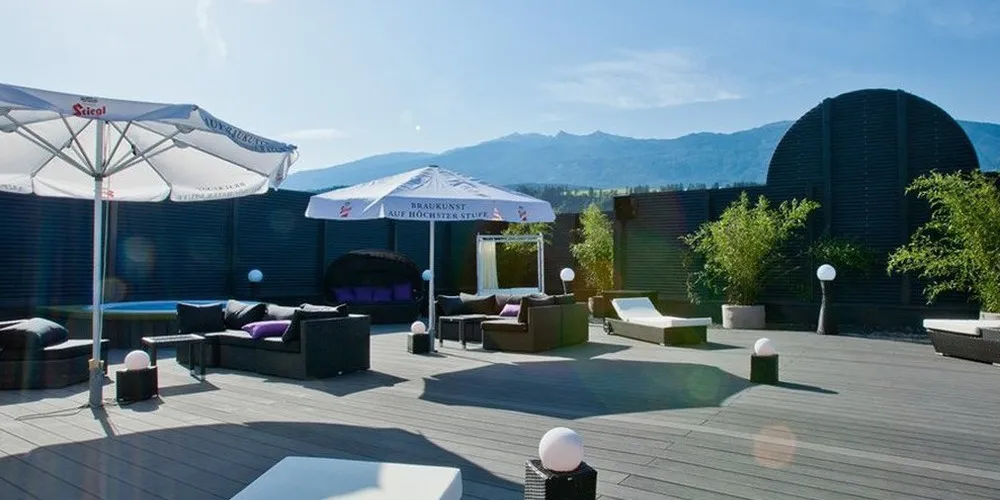
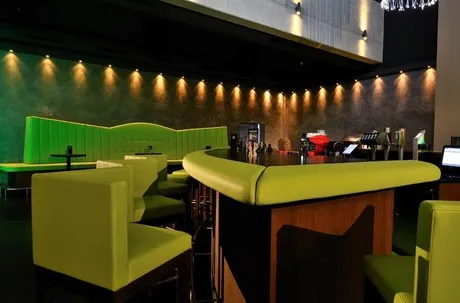
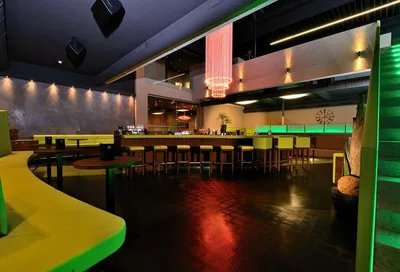
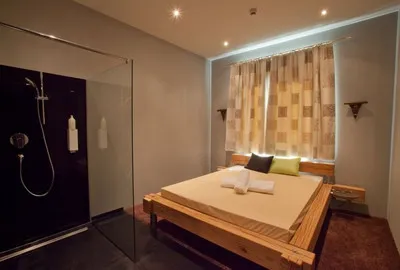
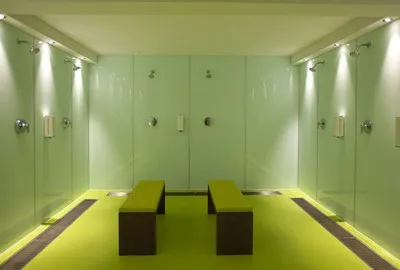
Tyrol's largest sauna club. Finnish sauna, steam bath, two whirlpools, relaxation room, solarium, porn cinema, love rooms with glass shower. Bar, à la carte restaurant. In summer a 450 m² roof terrace with whirlpool and mountain view. In the same building the VIP club "tabu" and a brothel (Laufhaus).
Size / area
Very large club
- Indoor
- 2550 m²
- Outdoor
- 450 m²
What to expect at FKK Circolo Passion Innsbruck (A)
Innsbruck
Innsbruck
Provincial capital of the federal state of Tyrol
Name origin: Insprucke (=bridge on the Inn)
First documented mention: 1187 AD
Population: 132,000
Area: 104.81 km²
Federal state: Tyrol
District: Statutory city
Vehicle registration: I
River: Sill-->Inn
The club FKK Circolo Passion is located in Innsbruck-Amras/Roßau.
Innsbruck is the capital of the federal state of Tyrol and at the same time the fifth-largest city in Austria. The city lies in a basin at 574 m above sea level and is bordered to the north by the Nordkette, the southernmost of the four great mountain ranges in the Karwendel, and to the south by the foothills of the alpine central range (Patscherkofel). The city lies on the so-called Brenner motorway, has its own main railway station and its own airport.
It has always been both Innsbruck's luck and misfortune to lie on the route to the south, shortly before the Brenner Pass, which was already largely passable as a route over the Alps in the 13th century. Misfortune, because travellers passing through have always either not stopped at all or only briefly. Luck, because Innsbruck thus lay on an important trade route: the Romans already built a military station here on the imperial road Verona–Augsburg. Around 800 AD the Bavarii discovered the northern bank of the Inn as a suitable place to settle. Between 1187 and 1205 the market finally received town charter rights, which brought influence and wealth through customs revenues. However, it was the Habsburgs who made Innsbruck significant. Their legacy, from the Hofburg, to the Golden Roof, Innsbruck's landmark, to the university and theatre house, still shapes the old town today. Above all Emperor Maximilian I (1459–1519), who expanded the Habsburg empire westward, was a fan of the residence city. His honorary tomb in the Hofkirche is the largest burial monument of the Habsburgs: 28 life-size bronze figures surround the cenotaph, though "the last knight" was actually buried in Vienna.
From 1806 to 1814 Tyrol belonged to Bavaria. The Tyrolean freedom fighter Andreas Hofer fought in 1809 at the Bergisel, the 746-metre-high city hill where the Four Hills Ski Jumping Tournament is also held, initially successfully but ultimately hopelessly against the Bavarian and French troops, from whose occupation he wanted to free his homeland. Although the residence of the provincial ruler had already been in Innsbruck since 1420, the city on the Inn only officially took over from Merano as capital of Tyrol in 1849.
Innsbruck is the administrative and economic centre as well as the cultural hub of western Austria, a year-round tourism centre (over 1 million overnight stays) and, with interruptions since 1669, a congress and university city. The Winter Olympics of 1964 and 1976 were held here.
Among Innsbruck's famous sons and daughters are Frederick III of Habsburg, Sigismund Franz of Habsburg, Magdalena of Austria as well as Carl-Heinz Schroth, Dietmar Schönherr, Christian Schwarz-Schilling and numerous leading winter sports athletes.