Atlantis Kufstein (A)
Gewerbepark Süd 7, 6330 Kufstein
Last updated on
Something wrong or missing?
Prices, opening times and all features · Atlantis Kufstein (A)
Features
Yes · 13
- Outdoor area (garden)
- Card payment / ATM
- Food included
- Live shows
- Professional massage
- Adult cinema
- Finnish sauna
- Soft drinks included
- Live sport on TV
- Steam bath
- Solarium
- Hot dinner
- Indoor whirlpool
No · 17
- Air conditioning
- Beer included
- Draught beer
- Cocktails
- Step-free access
- Free parking
- Free Wi-Fi
- Live DJ
- Pick-up service
- Overnight stay possible
- Valuables lockers
- Screened parking
- Slot machines
- SM room
- Indoor pool
- Outdoor pool
- Outdoor whirlpool
More features
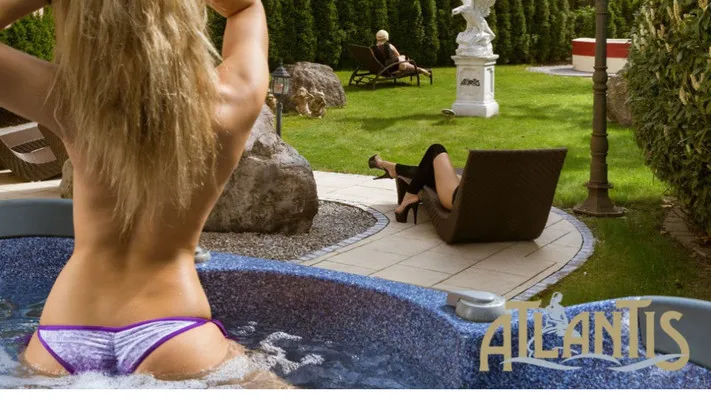
For more than 25 years, right at the Kufstein-Süd motorway exit. Bar with pole dance, restaurant, lounge with a big screen for sports, erotic cinema, themed rooms and suites, all with shower and toilet. Open-air suites on the roof terrace. Wellness with whirlpool, Finnish sauna, steam bath, infrared cabin, solarium, massages. Sun terrace, cash machine.
Size / area
Large club
- Indoor
- 2300 m²
- Outdoor
- 200 m²
What to expect at Atlantis Kufstein (A)
Kufstein
- Name origin
- Caofstein; 1205 AD Kopfstoa (dialect; = dialectal name for the Kufstein fortress)
- First documented mention
- 788 AD
- Population
- 20,000
- Area
- 39.37 km²
- Federal state
- Tirol
- District
- Kufstein
- Vehicle registration
- KU
- River
- Weißache-->Inn
The Club Atlantis is located in Kufstein-Endach on the southern edge of the town.
Kufstein is the second-largest town in the Austrian federal state of Tirol. It sits at 500 m above sea level, about 40 km south of Rosenheim and 80 km northeast of the state capital Innsbruck, right on the Bavarian border. Kufstein is easily reached via the A12 motorway in Austria and the A93 motorway in Bavaria, as well as via Kufstein train station.
The town lies on both sides of the Inn, between the local mountain Pendling and the Maistaller Berg to the west, the Thierberg to the north, the Kaisergebirge and the Stadtberg to the east, and the Kufsteiner Wald to the south; it also lies within the catchment area of the nature reserves Kaisergebirge as well as the Kufsteiner and Langkampfener Innauen.
Kufstein has belonged to the Duchy of Bavaria since ancient times. Towards the end of the 14th century it was granted town rights by the Bavarian Duke Stefan the Younger. At the Diet of Cologne in 1505, the Habsburg Maximilian I secured the area around Kufstein, bringing the town into Tirol and Austria. He later had Kufstein Castle, first mentioned in 1205 as a possession of the Bishop of Regensburg, expanded into a fortress; this is when the great round Kaiserturm was built, which has become Kufstein's landmark. In Napoleonic times, Bavaria managed to secure the town once more, from 1805 to 1814, after which Kufstein became permanently part of Austria. The Festung Kufstein gradually lost its military significance and was used until the late 19th century as a state prison, mainly for political prisoners.
With the railway connection in 1858, Kufstein's industrial and touristic development began. Today the town is home to numerous larger companies, but above all it is a popular holiday destination. Besides the Festung Kufstein and its Heldenorgel, audible throughout the town and the largest open-air organ in the world, the town's sights include the Altstadtmeile, the late Gothic town hall with its distinctive stepped-gable façade, the Heimatmuseum, the ruins of Thierberg, Schloss Hohenstaffing, and the parish church Kufstein-St. Vitus.
Throughout the year, the town holds a series of enjoyable events, including the Almabtrieb, the Kaiserfest, the Festival Kufstein unlimited, the Operettensommer, the Ritter-Fest, the Tanzsommer, the Weihnachtszauber at the fortress, and the Wunderlichen Kulturtage in Kufstein "WoasstEh!".