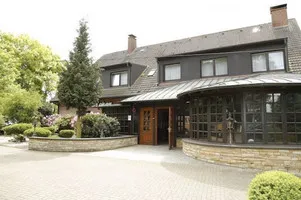
Xanten (D)
Philosophenweg 2, 46509 Xanten
Last updated on
Something wrong or missing?
This club has closed for good.
Clubs nearby · Xanten (D)
Prices, opening times and all features · Xanten (D)
Features
Yes · 12
- Air conditioning
- Outdoor area (garden)
- Draught beer
- Food included
- Free parking
- Free Wi-Fi
- Overnight stay possible
- Finnish sauna
- Screened parking
- Soft drinks included
- Live sport on TV
- Outdoor whirlpool
No · 18
- Beer included
- Card payment / ATM
- Cocktails
- Step-free access
- Live DJ
- Live shows
- Professional massage
- Pick-up service
- Adult cinema
- Valuables lockers
- Slot machines
- SM room
- Steam bath
- Indoor pool
- Outdoor pool
- Solarium
- Hot dinner
- Indoor whirlpool
More features
Size / area
Very large club
- Indoor
- 1000 m²
- Outdoor
- 3000 m²
What to expect at Xanten (D)
Xanten
- Name origin
- Colonia Ulpia Traiana (Lat., = colony named after Emperor Marcus Ulpius Traianus)
- First documented mention
- 110 AD
- Population
- 22,000
- Area
- 72.43 km²
- Federal state
- Nordrhein-Westfalen
- Administrative region
- Düsseldorf
- District
- Wesel
- Vehicle registration
- WES, DIN, MO
- River
- Rhein, Hohe Ley
The Club Xanten is located in Xanten at the south-western edge of the town centre.
Xanten is an idyllic small town on the Lower Rhine, connected via the Niederrheinbrücke to Wesel on the right bank of the Rhine. Together with Andernach (Antunnacum), Koblenz (Confluentes), Köln (Colonia Claudia Ara Agrippinensium), Mainz (Mogontiacum), Neuss (Novaesium), Speyer (Noviomagus), Trier (Augusta Treverorum) and Worms (Borbetomagus), Xanten is one of the sites that Roman troops brought under their control on the left bank of the Rhine during the time of Emperors Augustus and Tiberius, making it one of the oldest cities in Germany. Around 100 AD, the settlement, initially inhabited by the Sugambri, was elevated by Emperor Marcus Ulpius Traianus to Colonia Ulpia Traiana, making it the second most important trading post in the province of Germania inferior after Köln. After the town was completely destroyed by the Franks in 275 AD, a new settlement called Tricensimae arose there, which in turn was destroyed by Germanic tribes in the 5th century. Xanten plays a role in the Nibelungensaga, and its most important building is the Xantener Dom, which, however, was never a bishop's seat.
Of the former Roman settlements mentioned above, Xanten, with the exception of Andernach, is the only one from which no larger city has grown. The town has made good use of this circumstance and has become, so to speak, one single historical memorial site: right next to the tranquil old town centre with its Dom, Rathaus, Stiftsmuseum, Klever Tor, Kriemhildsmühle and Karthaus lie the Archäologischer Park Xanten (APX) and the amphitheatre in Birten, as well as the remains of the "Großen Thermen" with the Römermuseum, which vividly illustrate the Roman history of the town. Annual events at the Archäologischer Park Xanten such as the Tag der Begegnung, as well as craftsmen's markets and jousting tournaments, round off the town's offering of festivals and traditional customs and draw numerous visitors from far and wide.