FKK Paradies Erfurt (D)
Am Stollberg 49/50, 99085 Erfurt
Last updated on
Something wrong or missing?
Prices, opening times and all features · FKK Paradies Erfurt (D)
Features
Yes · 12
- Outdoor area (garden)
- Beer included
- Draught beer
- Food included
- Professional massage
- Adult cinema
- Finnish sauna
- Soft drinks included
- Indoor pool
- Outdoor pool
- Solarium
- Hot dinner
No · 18
- Air conditioning
- Card payment / ATM
- Cocktails
- Step-free access
- Free parking
- Free Wi-Fi
- Live DJ
- Live shows
- Pick-up service
- Overnight stay possible
- Valuables lockers
- Screened parking
- Slot machines
- SM room
- Live sport on TV
- Steam bath
- Indoor whirlpool
- Outdoor whirlpool
More features
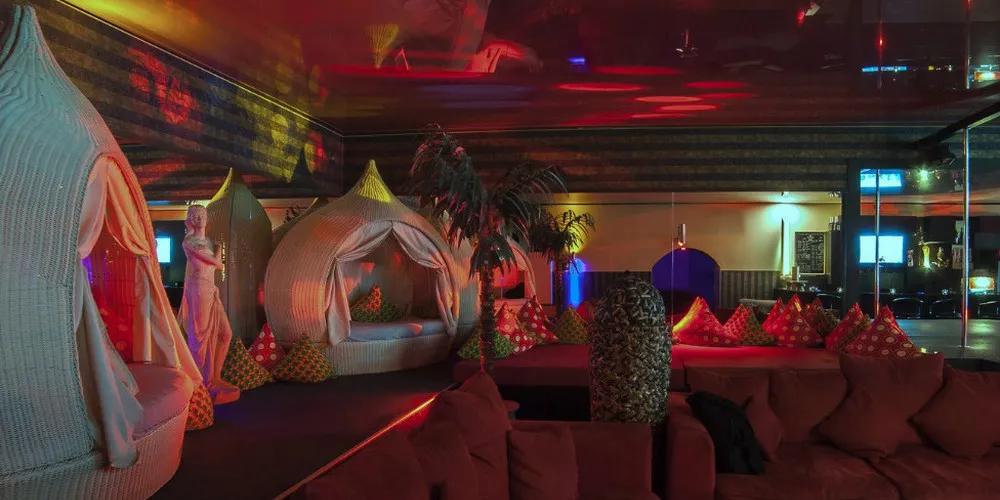
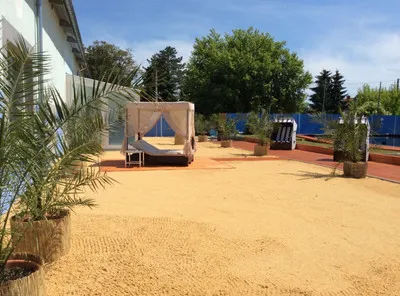
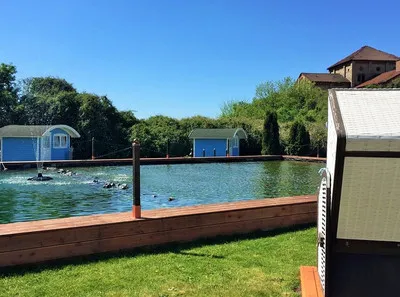
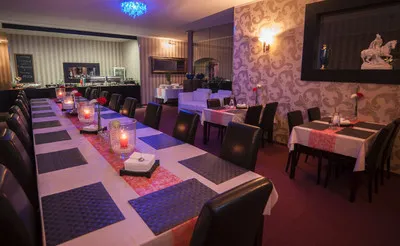
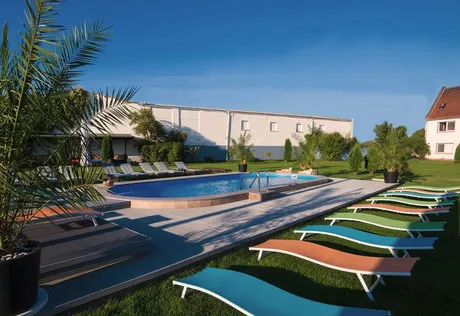
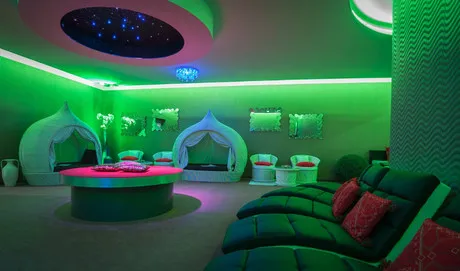
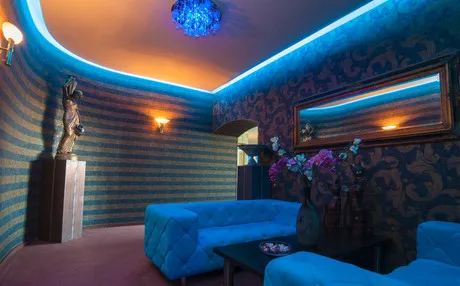
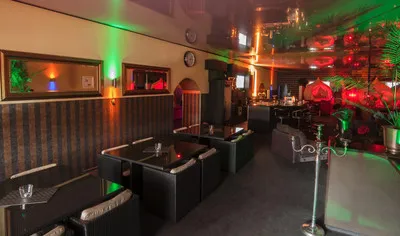
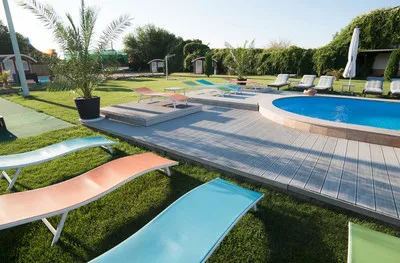
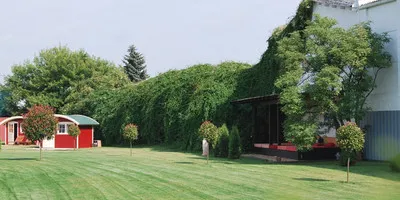
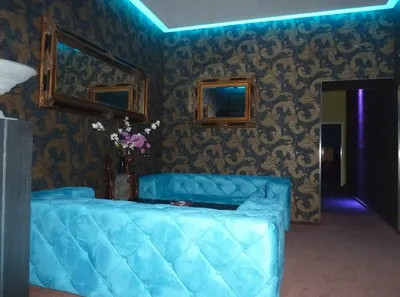
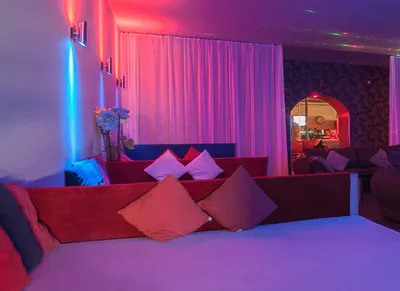
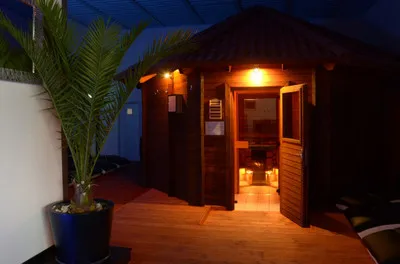
About 10,000 m². Indoor and outdoor sauna, steam sauna, infrared cabin, light therapy, heated indoor pool, outdoor pool, very large sunbathing lawn, bungalows in the garden. Massages for an extra fee. Indoor and outdoor bar, restaurant, erotic cinema, relaxation room with coloured light, table dance. Regular events with erotic stars.
Size / area
Very large club
- Indoor
- 4000 m²
- Outdoor
- 3000 m²
What to expect at FKK Paradies Erfurt (D)
Erfurt
Erfurt
State capital of the federal state of Thuringia
Name origin: Erphesfurt (Old High German, "ford through the dark")
First documented mention: 742 AD
Population: 214,000
Area: 269.88 km²
District: /
Vehicle registration: EF
River: Gera
The club FKK Paradies is located in Erfurt-Ost/Stollbergsiedlung.
Martin Luther studied here: with its university opened in 1392, Erfurt is home to the third-oldest university in Germany – or, thanks to the founding privilege of 1379, even the oldest. Erfurt is the state capital of Thuringia, an important trade fair city and seat of the Diocese of Erfurt, whose cathedral impressively dominates the cityscape. In 1970, in what was then the Hotel Erfurter Hof, Federal Chancellor Willy Brandt and East German Minister President Willi Stoph met for the first German-German summit, writing post-war German history. Erfurt is, of course, excellently connected in terms of transport, including its own airport, and thanks to its geographical location roughly midway between the cultural sites of Gotha and Weimar, it would be a worthwhile travel destination even if there were nothing else to see there. But Erfurt's historic old town offers exceptionally charming sights, not least because the city came through World War II relatively unscathed and because, since German reunification, considerable funds have flowed into renovating the city centre.
Erfurt's most important Romanesque building is the Peterskirche on the Petersberg in the centre of the city. The most important Gothic building, on the other hand, is the Marienkirche, which towers imposingly over the cityscape on the Domberg at the western edge of the old town ring. The first mention of its original building in the year 742 is regarded as the founding date of the city of Erfurt. Missionary bishop Boniface founded the Diocese of Erfurt here, but returned to his home diocese in Mainz as early as 755, merging the two dioceses. The secular rule of the Mainz bishops lasted until the Reichsdeputationshauptschluss of 1803, after which Erfurt, with a brief interruption from 1806 to 1814, passed to Prussia and then to Sachsen-Weimar-Eisenach. The cathedral has only been the seat of the newly created Diocese of Erfurt again since 1994.
East of the cathedral lies the old town with its medieval backdrop and the charming ensemble of half-timbered, burgher and merchant houses surrounding it, such as the Haus zum Ochsen or the Haus zum Stockfisch. Important Baroque buildings include the Kurmainzische Statthalterei, the Waage and the Zitadelle Petersberg. The Alte Synagoge in Erfurt's old town, at 900 years old, is the oldest surviving synagogue in Europe. The Krämerbrücke spans the gently babbling Gera; it is one of Erfurt's most famous landmarks and, with half-timbered buildings lining both sides in an unbroken row, is the longest continuously built-up bridge in Europe.
Erfurt has no pronounced suburban belt, which means that even at the city's edges the settlement pattern already has a rural character. Erfurt's local recreation areas therefore already spread out on urban territory and consequently extend all the way to the wooded heights of the Steigerwald and, further south, on to the natural landscape of the Thuringian Forest.
Erfurt is located in Thuringia at the heart of the Central German Metropolitan Region and is a popular destination for city travellers and those passing through. At the Erfurter Kreuz in the southwest of the city, the A4 and A71 motorways intersect. In total, the city has 4 motorway exits and almost every district can be easily reached by car.
Getting around in Erfurt itself is very straightforward, and from the city centre you can reach every district by public transport. The transport network of Erfurt is largely covered by buses and trams, with local train connections also existing within Erfurt. The city has a total of 8 railway stations, ensuring not only connections within Erfurt but also to almost all regions of Thuringia and beyond.
Anyone looking for a suitable hotel can find accommodation near the area in Erfurt. Hotels can be found in a relatively dense network across almost the entire city. Whether by the motorway or closer to the city centre – the range of hotels is diverse.
Erfurt's well-known sons and daughters include Elisabeth Lemmerhirt & Johann Ambrosius Bach, the parents of Johann Sebastian Bach, Max and Alfred Weber, Reinhard Gehlen, Christine Westermann, Franziska Schenk, Yvonne Catterfeld, Marco Schreyl, Clueso and Maria Ehrlich.